
If you want a budget smart band that reliably covers heart rate, SpO2, and sleep, prioritize stable optical sensor contact, conservative alerts (not "medical" claims), and an app that lets you review raw trends. This ranking focuses on practical accuracy expectations for everyday use in Thailand-especially for "สายรัดข้อมืออัจฉริยะ ราคาถูก" buyers comparing features against famous models.
Priority checklist for choosing a budget smart band
- Choose a band with continuous heart-rate tracking plus on-demand SpO2; avoid "one-tap" promises without trend history.
- Look for snug, stable fit (strap quality matters as much as sensors) to reduce motion artifacts during workouts.
- Prefer bands that show sleep stages + wake events and allow manual sleep edit if you do shift work.
- Check whether the app supports Thai-friendly notifications, clear charts, and easy export/sharing of trends.
- Verify the band supports your phone brand reliably (Android background restrictions can break syncing).
- Pick a display you can read outdoors; usability affects how often you actually check abnormal readings.
Evaluation criteria: sensors, algorithms, and real-world accuracy
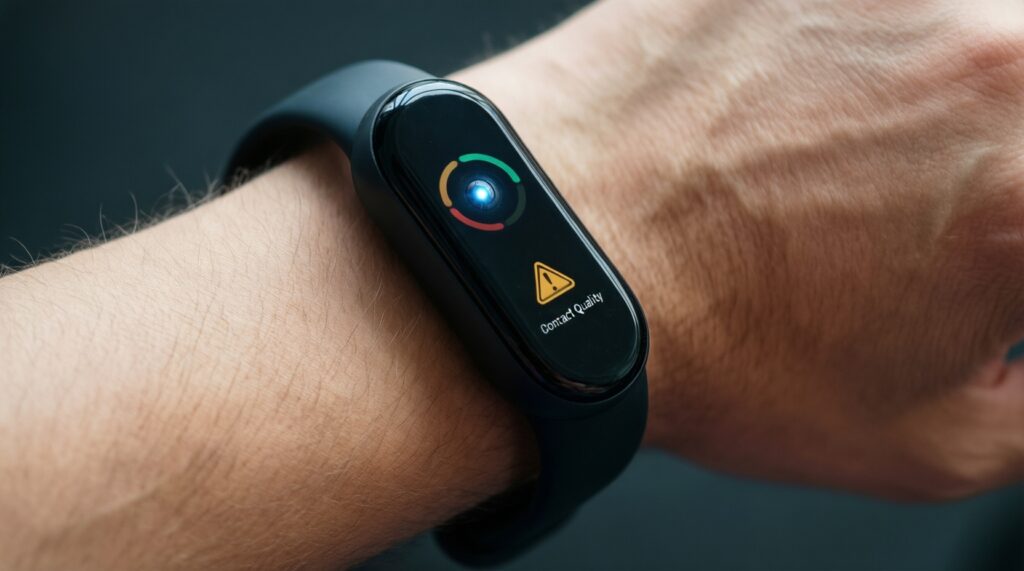
- Optical sensor stability: flat underside, good strap, and secure fit reduce false spikes in HR and SpO2.
- Motion handling: bands differ most during walking, HIIT, and scooter/vehicle vibration-where cheap trackers drift.
- Signal quality feedback: some apps warn about poor contact; this is crucial for "สมาร์ทแบนด์ วัดชีพจร SpO2 ราคาถูก" use.
- SpO2 logic: best results come from stillness + repeated readings; one-off numbers are less useful than nightly/weekly trends.
- Sleep detection behavior: good models separate "lying still" from actual sleep and handle naps; key for "สมาร์ทแบนด์ วัดการนอนหลับ แม่นยำ".
- Alarm/notification reliability: consistent vibration and notification delivery is a daily-value feature often overlooked.
- App ecosystem maturity: stable syncing, clear charts, and few "phantom" workouts matter more than extra sport modes.
- Comfort and skin tolerance: humidity + heat in TH can worsen rash risk; lighter bands and breathable straps help.
- Data transparency: ability to review per-minute HR, SpO2 history, and sleep timeline beats "score-only" dashboards.
Testing protocol: how we measured heart rate, SpO2 and sleep
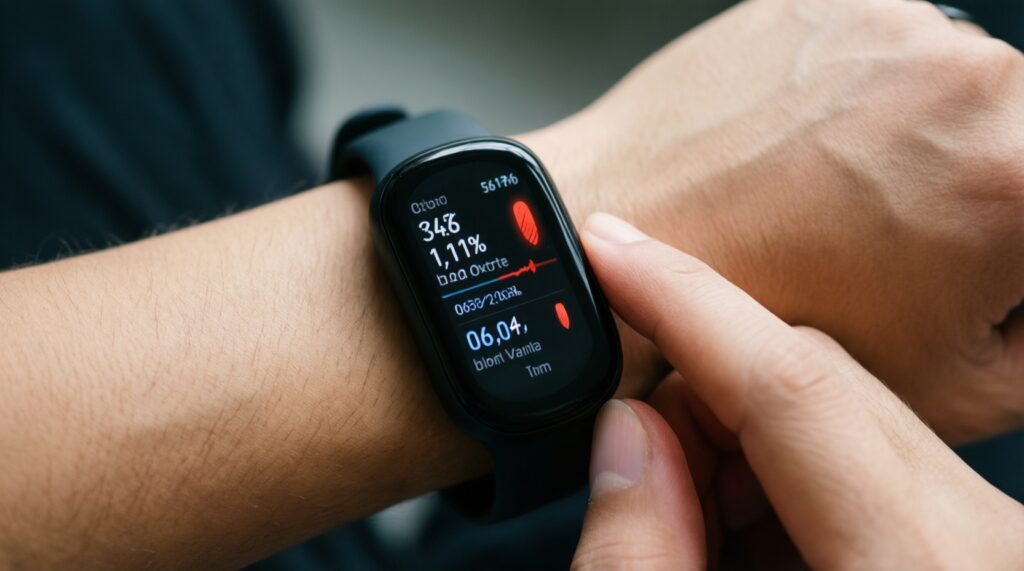
Use this reproducible protocol to validate any "สายรัดข้อมืออัจฉริยะ วัดออกซิเจนในเลือด SpO2" claim on your own wrist. The goal is not a single "perfect" number, but consistency across repeated checks and realistic conditions.
Step-by-step protocol you can repeat
- Fit standardization: wear the band 1-2 finger widths above the wrist bone; tighten to "snug but not numb."
- Heart rate checks: compare band HR against a manual pulse count (15 seconds × 4) during: sitting, walking, and post-stairs recovery.
- SpO2 checks: take 3 back-to-back readings while seated, arm supported, warm fingers; repeat at a different time of day.
- Sleep checks: keep a simple sleep log (bedtime, wake time, night awakenings). Compare band timeline to your notes for 7 nights.
- Artifact audit: mark moments with heavy motion (motorbike commute, gym kettlebells) and see if the band "jumps."
- Trend review: judge by weekly patterns, not the best or worst single reading.
Comparison of testing setups (choose what matches your lifestyle)
| Variant | Who it suits | Pros | Cons | When to choose |
|---|---|---|---|---|
| Seated baseline (HR + SpO2, arm supported) | Health-conscious buyer, first-time band user | Lowest motion noise; easiest to repeat consistently | Doesn't reveal workout instability | When you mainly want calm-state trends and a reliable starting point |
| Walking + stairs recovery (HR responsiveness) | Commuter, casual exerciser | Shows lag, overshoot, and dropouts clearly | Harder to standardize pace without a treadmill | When you care about HR guidance during daily activity |
| HIIT / weights (motion artifact stress test) | Gym-goer, runner cross-training | Exposes false spikes and missing intervals | Some bands will look "bad" even if fine for daily use | When workout HR accuracy matters more than sleep scoring |
| Overnight sleep + nap detection (7-night log) | Shift worker, sleep improver | Reveals consistency in bed/wake times and awakenings | Sleep stages are model-dependent; don't treat as clinical | When your main goal is sleep routine improvement |
| Hot/humid day wear (comfort + sensor contact) | Bangkok commuter, outdoor worker | Highlights strap rash risk and slipping sensors | Not a "lab" test; results vary by skin and sweat | When you wear a band all day and need comfort + stable readings |
Top 8 budget wristbands with side-by-side comparison table
This is a practical "เปรียบเทียบ สมาร์ทแบนด์ ราคาถูก กับ รุ่นดัง" shortlist: all models below can cover HR, SpO2, and sleep, but they differ in stability, app clarity, and how they behave under motion.
Quick scenario picks (if..., then...)
- If you want the safest all-rounder, then start with Xiaomi Smart Band 8 or Huawei Band 8 and validate with the protocol above.
- If you mainly care about long battery feel + big display, then consider Amazfit Band 7.
- If you are a shift worker with naps, then prioritize bands with clearer sleep timelines and manual edits (often Huawei/Xiaomi ecosystems do better here).
- If you lift weights or do HIIT, then pick the model that shows fewer HR "jumps" on your wrist, even if its sleep scoring looks average.
- If you just need basic tracking at the lowest cost, then Redmi Smart Band 2 or realme Band 2 can work-expect more compromises under motion.
Side-by-side comparison (features that affect real use)
| Model | HR / SpO2 | Sleep experience | App & ecosystem | Strengths in real life | Typical trade-offs | Persona tags |
|---|---|---|---|---|---|---|
| Xiaomi Smart Band 8 | HR + on-demand/periodic SpO2 (model/app dependent) | Strong timelines; good for routine tracking | Mi Fitness / Xiaomi ecosystem | Balanced daily tracking; good accessory/strap availability | Workout HR can drift with heavy wrist flexion; notifications depend on phone settings | commuter, sleep improver, casual fitness |
| Huawei Band 8 | HR + SpO2 focus with stable contact | Often clear sleep presentation; useful trends | Huawei Health | Comfortable for all-day wear; solid sleep-focused experience | App permissions/sync behavior can vary by Android brand | shift worker, sleep tracker, health-conscious |
| Amazfit Band 7 | HR + SpO2 with emphasis on trends | Good for routine; check nap handling on your schedule | Zepp | Large screen; easy glanceability; good daily usability | HIIT motion handling varies by wrist/strap tightness | commuter, outdoor walker, big-display fan |
| Samsung Galaxy Fit3 | HR + SpO2 (features depend on region/phone pairing) | Polished interface; good for consistency | Samsung Health | Great if you already use Samsung services | Best experience is usually within Samsung ecosystem; price can float above "budget" | Samsung user, office worker, daily tracker |
| OPPO Band 2 | HR + SpO2 (implementation varies) | Good general tracking; verify sleep timeline clarity | HeyTap Health / OPPO ecosystem | Comfort + screen quality; solid daily wear | Long-term app updates can be less predictable across regions | OPPO phone owner, commuter, lifestyle tracker |
| Honor Band 7 | HR + SpO2 basics | Decent routine tracking; verify nap behavior | Honor Health (region-dependent) | Simple, lightweight, usually good value | App ecosystem and translations may be less consistent | value seeker, beginner, light sleeper |
| realme Band 2 | HR + SpO2 for casual use | Good enough for bedtime/wake time checks | realme Link | Budget-friendly entry point; straightforward UI | More HR noise in intense workouts; fewer advanced sleep insights | student, budget-first, casual mover |
| Redmi Smart Band 2 | HR + SpO2 entry-level | Basic sleep windows; focus on consistency not stages | Mi Fitness (varies) | Low-cost daily tracking; lightweight | More dropouts under motion; fewer useful controls/metrics | budget-first, commuter, first-time buyer |
Model deep dives: performance, pros, cons, and best-use persona
- Pick your primary job: (A) stable HR during activity, (B) SpO2 trend checks, or (C) sleep routine improvement. Don't expect one cheap band to be best at all three.
- Choose your persona match:
- Commuter: prioritize readable screen + stable notifications.
- Runner/gym-goer: prioritize fewer HR spikes during motion; test with stairs/HIIT.
- Shift worker: prioritize sleep timeline clarity + naps/manual edits.
- Health-conscious: prioritize repeatable SpO2 readings + trend history.
- Shortlist 2 models based on your phone ecosystem (Xiaomi/Huawei/Samsung/OPPO) and app stability.
- Run the 20-minute validation: seated HR+SpO2 (3 readings), then a 10-minute walk/stairs HR check.
- Run the 7-night sleep log: keep simple notes and compare bed/wake times and awakenings.
- Decide by failure mode: keep the band that fails "gracefully" (occasional gaps) rather than wildly (random spikes, implausible drops).
How cheap bands compare to flagship trackers in accuracy
- Over-trusting single readings: one SpO2 number is less useful than repeated, still, comparable conditions-especially for "สายรัดข้อมืออัจฉริยะ วัดออกซิเจนในเลือด SpO2".
- Assuming sleep stages are ground truth: even expensive devices disagree; use sleep stages as coaching signals, not diagnostics.
- Ignoring fit: strap quality and how you wear it can matter more than the sensor generation.
- Testing only at rest: budget bands often look fine seated, then degrade in HR accuracy during motion.
- Comparing against "a famous model" without matching conditions: when doing "เปรียบเทียบ สมาร์ทแบนด์ ราคาถูก กับ รุ่นดัง", compare on the same wrist position, same tightness, and same activity.
- Missing phone-side bottlenecks: Android battery optimization can delay notifications and background sync, making a good band feel unreliable.
- Chasing too many sport modes: mode count rarely improves HR quality; motion handling and contact stability do.
- Buying for "medical safety": consumer bands are wellness tools; if readings worry you, confirm with proper medical equipment.
Daily use: battery life, app ecosystem, comfort and durability
For a balanced, low-risk pick, Xiaomi Smart Band 8 and Huawei Band 8 tend to fit most intermediate users; for a bigger screen and easy day-to-day visibility, Amazfit Band 7 is a strong alternative. If you're deeply in Samsung's app ecosystem, Galaxy Fit3 is usually the smoothest, while Redmi Smart Band 2 and realme Band 2 suit strict budget buyers who accept more limitations under motion.
Common concerns and concise answers for practical buyers
Is a budget band accurate enough for heart rate during workouts?
Often yes for steady activities (walking, easy runs), but many cheap bands struggle with rapid wrist motion and interval changes. Validate with stairs/HIIT and keep the model with fewer spikes and fewer gaps.
Can I trust SpO2 on a smart band?
Treat SpO2 as a trend tool, not a diagnosis. Use repeated still readings under similar conditions; if you see concerning patterns, confirm with a medical-grade device.
Why does my sleep tracking look wrong on some nights?
Late phone use, lying still while awake, alcohol, and shift schedules can confuse sleep detection. Keep a simple sleep log for a week and judge consistency, not a single night's score.
Do I need to stay in the same brand ecosystem as my phone?
It helps. Notification reliability, syncing stability, and permissions are usually smoother when band + app match your phone brand's ecosystem.
How tight should I wear the band for better HR and SpO2?
Snug enough to prevent sensor gaps, but not so tight that it leaves deep marks or numbs your hand. Move it slightly higher on the arm during workouts for better stability.
What's the simplest way to compare two bands at home?
Do three seated SpO2 readings, a 10-minute walk with a short stairs segment for HR responsiveness, and a 7-night sleep log. Choose the band that stays consistent across repeats.