
If you want sports earbuds that don't fall out, pick by retention style: in-ear with wings/foam suits most gym and steady runs, ear-hook designs are the safest bet for high-bounce running and HIIT, and bone conduction is best when you must hear traffic. For Thai conditions (heat, sweat, sudden rain), materials and fit tuning matter as much as sound.
Quick verdicts for active use
- For the strongest "หูฟังวิ่งไม่หลุด" priority: choose an ear-hook/over-ear design before chasing higher audio specs.
- For mixed workouts and decent isolation: หูฟังอินเอียร์สำหรับกีฬา with stabilizer wings + correct tip size is the best balance.
- For road awareness and safer outdoor runs: หูฟังนำเสียง bone conduction is the most predictable choice.
- For humid, sweaty sessions: prioritize grippy coatings and easy-to-clean nozzles over glossy shells.
- Comfort comes from pressure distribution: hooks spread load on the ear; in-ears load the canal; bone conduction loads the cheekbones.
How retention designs influence secure fit: silicone tips, foam, and wings
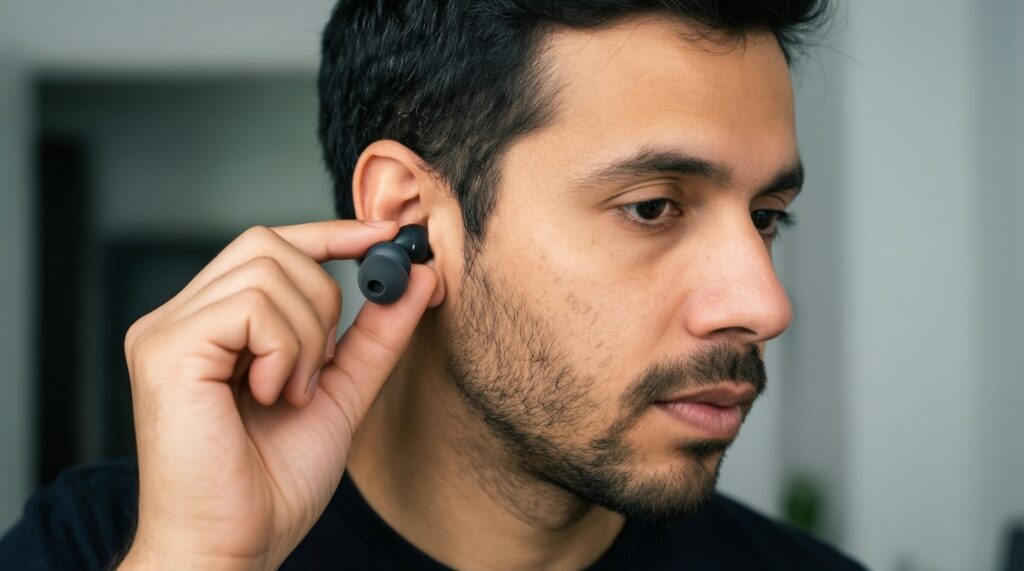
Use these criteria to decide why earbuds slip for you and which retention system fixes it:
- Ear canal seal (silicone): better for consistent bass and isolation; can slip if the surface gets sweaty or the tip is too small.
- Compression fit (foam tips): expands to fill the canal, often improving grip; can feel warmer and needs more frequent replacement.
- Anti-rotation support (wings/fin stabilizers): anchors against the concha to stop twisting during impact-core feature for "หูฟังวิ่งไม่หลุด".
- Nozzle angle and depth: shallow nozzles rely on wings/hooks; deeper fit relies on seal and can increase occlusion (boomy footsteps).
- Shell texture: matte/rubberized shells resist sweat slip more than smooth glossy plastic.
- Weight distribution: heavier buds benefit from hooks; lighter buds can work well with fins + tips.
- Ear shape compatibility: some ears reject wings (pressure points); some canals reject foam (itch/heat). Fit is individual.
- Motion profile: steady jogging needs less retention than sprint intervals, jump rope, burpees, or box jumps.
- Personal tolerance: if in-ear pressure triggers discomfort, shift to hooks (less canal pressure) or bone conduction (no canal seal).
Ear-hook and over-ear systems: stability across running, gym, and HIIT
Ear-hook options are what most people mean by หูฟังตะขอเกี่ยวสำหรับวิ่ง: they physically latch around the ear, reducing reliance on canal friction. Below is a practical comparison of common form factors within หูฟังกีฬา products.
| Variant | Who it suits | Pros | Cons | When to pick |
|---|---|---|---|---|
| In-ear true wireless with wings (silicone tips + fins) | Gym, treadmill, steady runs; users who want isolation | Good seal and bass; compact; stable if wings match your ear | Can create pressure/occlusion; wings can cause hotspots; may need tip rolling | When you want one pair for most workouts and can tolerate in-ear fit (classic หูฟังอินเอียร์สำหรับกีฬา) |
| In-ear true wireless with foam tips | Runners who keep losing seal; people with tricky canals | Often best grip in sweaty conditions; improves isolation | Warmer feel; tips wear out; can reduce "airy" treble | When silicone slips or bass drops mid-run |
| Ear-hook true wireless (in-ear driver + over-ear hook) | Outdoor runners, HIIT, jump rope; anyone prioritizing no-slip | Excellent stability; less dependent on perfect seal; safer for hard impacts | Less pocketable; glasses/helmet can interfere; fit depends on hook geometry | When "must not fall" beats "smallest case" (strongest route to หูฟังวิ่งไม่หลุด) |
| Ear-hook open-ear (speaker sits near canal, not inside) | City running, cycling, gym users who want awareness | Very comfortable; reduced sweat buildup in canal; better awareness | Weaker bass; leaks sound; noisy gyms reduce clarity | When you dislike in-ear pressure but still want hook stability |
| Neckband with in-ear buds (wired between ears) | Long sessions; users who fear losing one bud | Harder to lose; stable; usually longer battery due to larger housing | Neckband can bounce; less "true wireless" freedom; heat on neck in Thailand | When you want security against dropping/losing earbuds during travel + training |
| Over-ear sports headphones (full-size) | Indoor training only; strength training where you don't move much | Big sound; comfort for some; easy controls | Heat/sweat accumulation; can slip with fast movement; less practical outdoors | When training indoors in AC and you prioritize sound over mobility |
Bone-conduction headphones: retention plus situational awareness
หูฟังนำเสียง bone conduction sits on the cheekbones and leaves the ear canal open. Retention is usually good because the frame wraps around the head, and awareness is the main advantage.
- If you run roadside or cross busy streets, then bone conduction is the safer default because you can hear vehicles and horns.
- If your ears get irritated by in-ear tips or frequent infections, then bone conduction (or open-ear hooks) reduces canal wear and moisture buildup.
- If your gym plays loud music, then prefer ear-hook in-ear or winged in-ear, because bone conduction clarity drops in high ambient noise.
- If you do fast-impact HIIT, then bone conduction works well when the frame fits snugly; otherwise pick ear-hook in-ear for maximum "locked-in" feel.
- If you need calls during training, then test wind handling outdoors-open-ear styles can struggle in wind compared with sealed in-ear designs.
Ingress protection and materials: sweat, rain, and long-term grip
- Start with your exposure: indoor only (sweat) vs outdoor (sweat + rain + wind).
- Check IP rating and sealing points: focus on charging contacts, mic ports, and seam lines; these fail before the driver.
- Prefer grippy materials: matte/rubberized housings and textured hooks resist slipping when your skin is wet.
- Match tips to sweat level: foam for maximum hold, silicone for easier cleaning, wings for anti-rotation stability.
- Confirm cleaning routine compatibility: choose designs with removable tips and easy-to-wipe surfaces; avoid deep crevices that trap salt.
- Sanity-check fit with your gear: try with sunglasses, cap, helmet straps, and mask-hooks and frames can conflict.
- One maintenance tip: after each session, wipe buds and hooks with a slightly damp cloth, then dry; remove tips weekly to clean the nozzle area so sweat salts don't reduce grip and hygiene.
Audio trade-offs: bass, isolation, and safety when exercising
- Chasing maximum bass for outdoor running: strong isolation can reduce awareness-avoid fully sealed in-ears on busy roads unless you run in controlled areas.
- Assuming "bigger driver = more secure fit": heavier shells often slip more; retention design matters more than driver size.
- Buying the wrong tip size: too small slips; too large pushes out under jaw movement-always test with talking and head turns.
- Ignoring occlusion effect: sealed in-ears can amplify footstep thumps; wings/hooks won't fix that-tip choice and venting matter.
- Choosing bone conduction for a loud gym: you may crank volume to compensate; if you need isolation, switch to in-ear with a stable fit.
- Overlooking wind noise: open-ear and bone conduction can be hit by wind; consider your outdoor routes.
- Not testing with sweat: a fit that feels fine dry can fail after 10-15 minutes; simulate by a warm-up and re-seat once.
- Equating "comfortable for 1 minute" with "comfortable for 1 hour": pressure points from wings/hooks appear later-check hotspots after a full session.
Practical checklist: choosing the right form factor for your sport
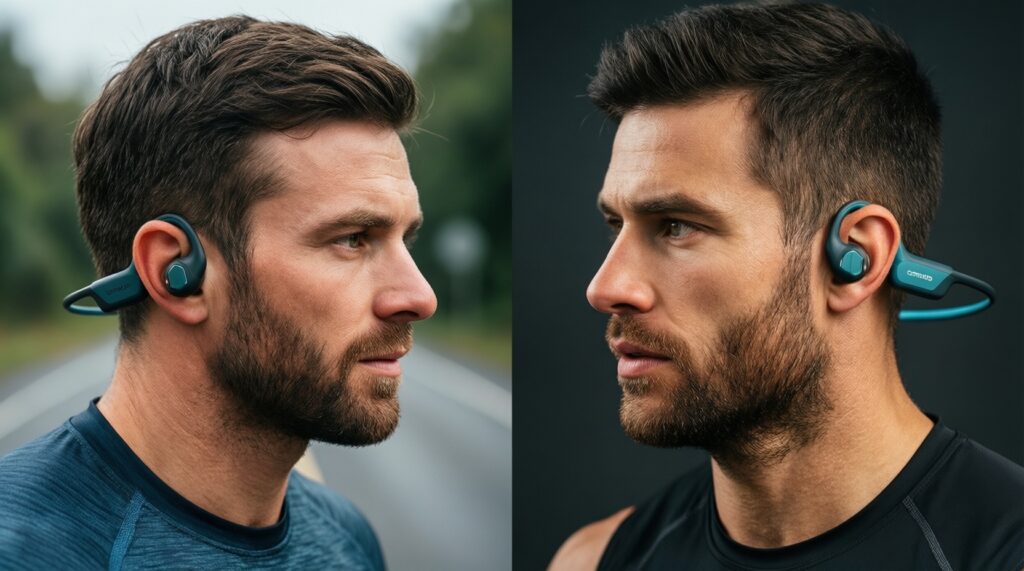
- Where do you train most? Road/traffic → bone conduction or open-ear hook; indoor/controlled → in-ear or ear-hook in-ear.
- How explosive is your movement? HIIT/jumps → ear-hook in-ear; steady run/gym → in-ear with wings or foam.
- Can you tolerate in-ear sealing? Yes → winged/foam in-ear; no → open-ear hook or bone conduction.
- Is ambient noise high? Yes → sealed in-ear (wings/foam); no → open-ear/bone conduction is viable.
Best match tends to look like this: for outdoor road running and awareness, bone conduction is often the most workable; for the strongest "won't fall out" security in sprints and HIIT, ear-hook in-ear designs are typically the most dependable; for an all-round gym + run setup with strong sound, winged or foam-tip in-ear sports earbuds are usually the easiest balance to live with.
Common decision points and concise answers
What's the most reliable style if my priority is "หูฟังวิ่งไม่หลุด"?
Ear-hook in-ear designs are usually the most secure because they don't rely only on canal friction. Choose hooks if you do fast pace changes, jumps, or sweat heavily.
Are หูฟังอินเอียร์สำหรับกีฬา safe for outdoor running?
They can be, but strong isolation may reduce awareness on busy roads. If you run near traffic, consider bone conduction or open-ear hooks, or reserve sealed in-ears for safer routes.
When does หูฟังนำเสียง bone conduction make the most sense?
When situational awareness matters: roadside running, cycling, and shared paths. It's also useful if you dislike in-ear pressure or get irritation from tips.
Do หูฟังตะขอเกี่ยวสำหรับวิ่ง work with glasses or helmets?
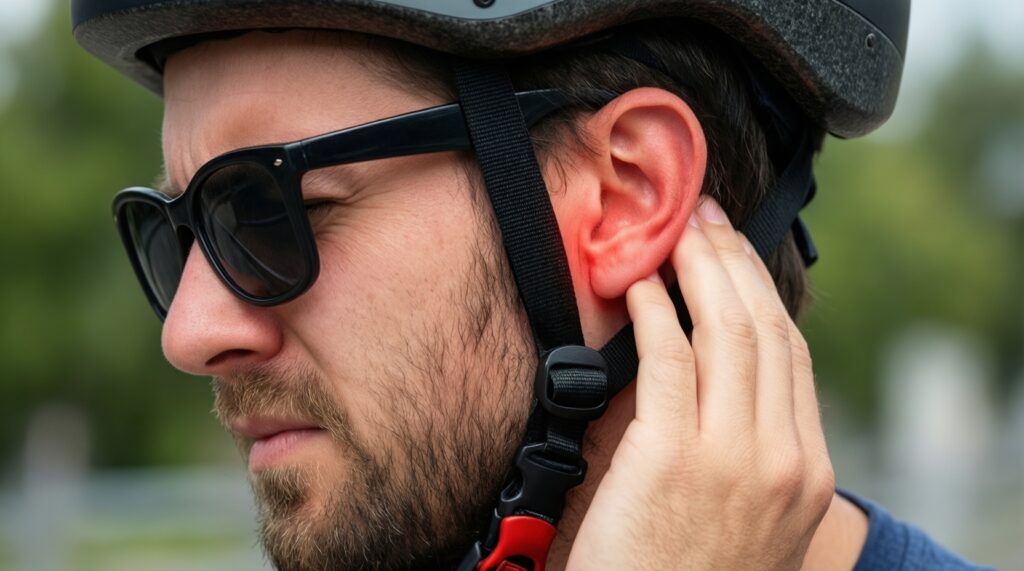
Sometimes yes, but interference is common. Test with your exact sunglasses/helmet straps and check for pressure points behind the ear after 20-30 minutes.
Silicone vs foam tips: which helps grip more during sweat?
Foam often grips better because it expands to your canal shape. Silicone is easier to clean and can still be stable if the size and wing support are correct.
Why do my earbuds loosen when I talk or chew?
Jaw movement changes ear canal shape and can push a too-deep or too-large tip outward. Try a smaller tip, a different nozzle angle, or a wing/ear-hook system that resists rotation.
What's one quick fix before buying new หูฟังกีฬา?
Try a different tip size/material and add stabilizer wings if available. Many "slip" problems come from tip mismatch rather than the earbuds themselves.