
For road safety in Thailand, ambient/transparency mode (or open-ear designs) is usually the better default than full ANC, because it preserves traffic cues like engines, horns, and approaching bikes. Use ANC selectively to reduce steady low-frequency noise (e.g., BTS hum) while keeping volume moderate, one ear free if needed, and quick-access controls ready.
Safety snapshot for outdoor workouts
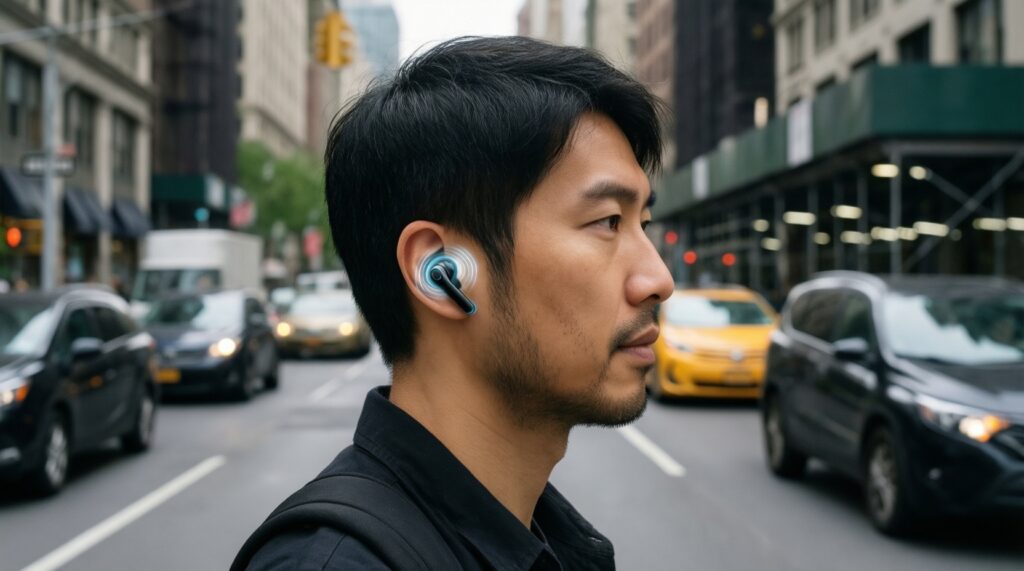
- Default to ambient/transparency when you must detect vehicles, scooters, and warnings quickly.
- Use ANC mainly for steady noise environments and only if you can keep situational awareness via settings or routing.
- Prefer quick controls: one-tap transparency, wind-noise reduction, and pause-on-remove.
- Fit and seal change real safety more than specs; a tight seal plus ANC can mask critical cues.
- Open-ear or low-isolation solutions reduce risk when crossings, shared paths, or mixed traffic are unavoidable.
How active noise cancellation behaves during outdoor exercise
- Frequency focus: ANC is strongest on steady low-frequency noise (road rumble, engines at distance) and weaker on sudden high-frequency cues (horns, bells), which can distort what you perceive as "safe silence."
- Wind interaction: Wind turbulence can trigger ANC/feedback artifacts; look for wind-noise reduction or a mode that prioritizes voice/traffic bands.
- Latency and processing: ANC and adaptive algorithms add processing; rapid environmental changes (passing trucks, motorcycles accelerating) can feel "laggy" or inconsistent.
- Seal dependency: With in-ears, tips and insertion depth can create strong passive isolation; combining that with ANC may over-attenuate external cues.
- Adaptive behavior: Some models auto-adjust ANC strength; outdoors this can unpredictably change how audible traffic is.
- Bone conduction of cues: You may still feel vibration/low rumble, but directionality is reduced; relying on "feeling" vehicles is risky at intersections.
- Microphone placement: Sweat and movement can affect mic ports, changing cancellation quality mid-run or mid-ride.
- Control access while moving: If you can't switch from ANC to transparency instantly (gloves, sweat, rain), ANC becomes a safety liability.
How ambient/transparency modes preserve situational awareness
| Variant | Who it fits | Pros | Cons | When to choose |
|---|---|---|---|---|
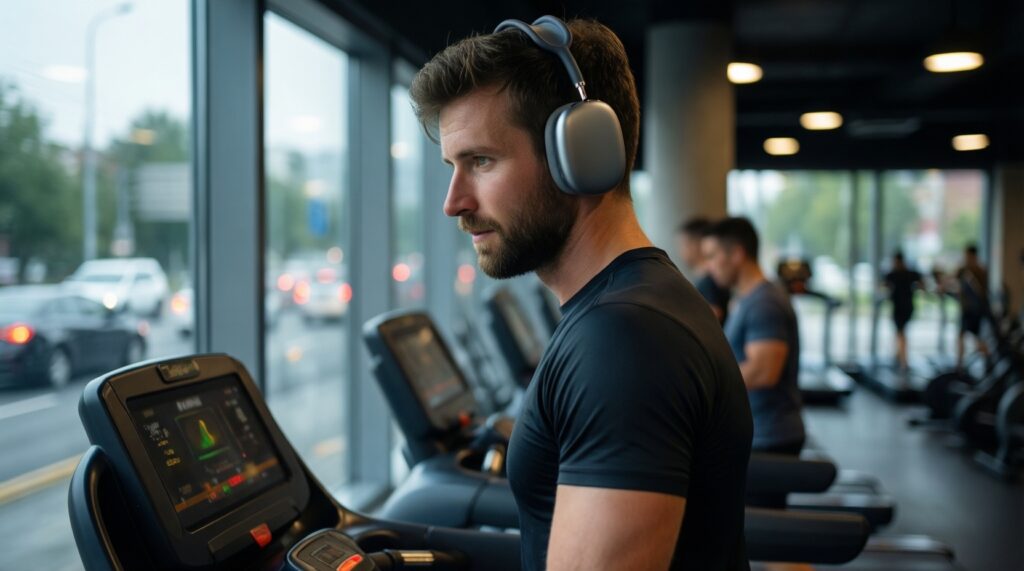
| Full ANC (maximum isolation) | Gym treadmill, indoor cycling, controlled environments | Strong reduction of steady noise; easier to keep volume lower | Traffic cues heavily reduced; directionality worsens; risk rises in mixed traffic | Only when you are separated from vehicles and don't need rapid external cue detection |
| Adaptive ANC (auto-adjust) | Commuters switching between BTS/sidewalks | Convenient transitions; can lower fatigue from constant noise | Unpredictable attenuation outdoors; may "over-cancel" during quiet stretches | When you can manually override quickly and you understand how your model behaves |
| Transparency / Ambient mode (microphone passthrough) | Road runners, urban walkers, shared-path users | Preserves horns/bells; better awareness of approaching bikes/scooters | Can amplify wind; mic quality varies; may sound unnatural at high passthrough levels | Default choice for street workouts where vehicles can enter your space unexpectedly |
| "Awareness" mode tuned for safety (traffic/voice emphasis) | Users who want music + priority to warnings | Often reduces low-frequency masking while keeping key mid/high cues audible | Model-dependent; may still compress sudden sounds | When your route includes crossings and you need consistent cue audibility |
| Open-ear (air conduction) sport headphones | Road cyclists and runners who must hear everything | Highest environmental audibility; low occlusion; stable for long sessions | Less bass; noisy streets can overpower music; sound leakage | When "hear the street first" matters more than audio fidelity |
| Bone-conduction (with ear canal open) | Users sensitive to ear occlusion; hot/humid workouts | Ear canal stays open; good awareness; comfortable with helmets/glasses | Vibration feel; limited bass; very loud traffic can still mask content | When you need maximum awareness and minimal in-ear sealing |
For buyers searching Thai storefronts by features and cost (e.g., หูฟังกีฬา ANC ราคา or หูฟังกีฬา โหมดรับเสียงภายนอก ราคา), treat "ANC strength" and "transparency quality" as separate requirements. A cheap transparency implementation can be worse than weak ANC because it introduces wind roar and compression artifacts that hide real cues.
Headphone design factors that change real-world safety
- If your route has frequent crossings, U-turns, or motorbikes entering from side streets, then prefer transparency/open-ear and keep ANC off until you are on a separated path.
- If you cycle on-road with a helmet and sunglasses, then avoid deep-seal in-ears; choose open-ear/bone-conduction or a low-isolation earbud with a stable fit to reduce "blind hearing."
- If you run in windy coastal areas or on elevated roads, then prioritize wind-noise management (foam tips, wind filters, or a transparency mode that doesn't over-amplify low frequencies).
- If you sweat heavily (hot/humid Thai climate), then choose designs with protected mic ports and reliable touch/physical controls; accidental mode switches can be as dangerous as poor isolation.
- If you rely on phone calls/voice prompts while moving, then choose a mode that keeps external cues audible while preserving speech intelligibility (often "awareness/voice" presets).
Quantitative comparison: hearing cues, reaction time, and risk
- Classify your environment noise: steady low-frequency (traffic flow, rail hum) favors limited ANC; unpredictable intermittent cues (scooters, horns) favors transparency/open-ear.
- Check cue priority: if you must detect approach direction, avoid deep isolation; directionality generally improves with less sealing.
- Control latency risk: choose a device where switching to transparency is instant and reliable while moving (gesture/physical button, no app-only control).
- Set a volume rule: keep playback low enough that you can still hear a normal external warning without straining; if you must raise volume to "feel safe," switch modes/design.
- Audit seal strength: try different tips; if passive isolation is strong, reduce ANC or move to open-ear for street sessions.
- Test a "horn check" safely: in a controlled place (not on the road), confirm you can perceive sharp alerts and approaching engines in your chosen mode.
- Make a route-based preset: one preset for "crossings/side streets" (transparency) and one for "separated path" (optional ANC), and switch before risk points.
Persona scenarios: runner, road cyclist, urban commuter, trail hiker
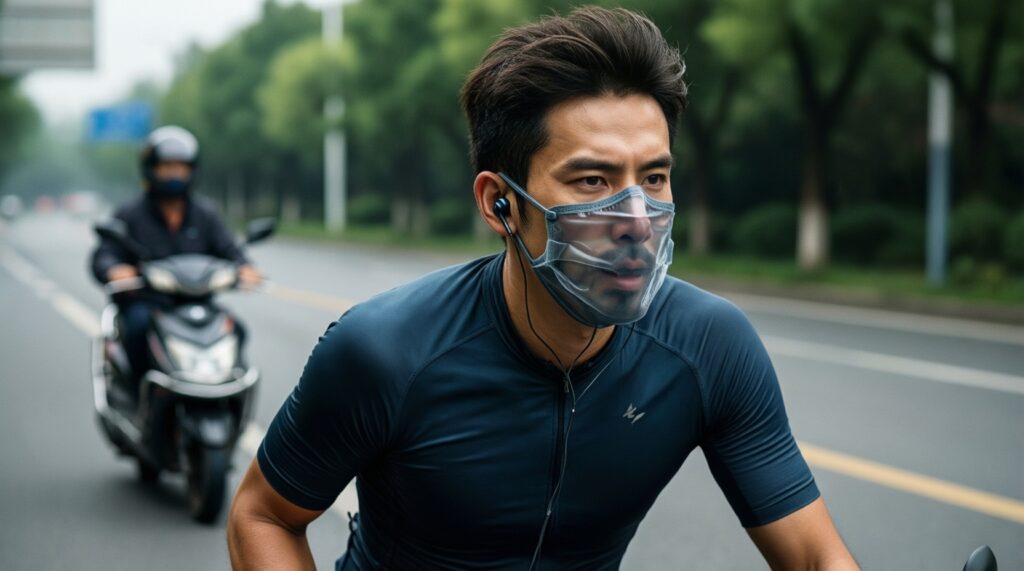
- Runner: Buying หูฟังวิ่ง ANC รุ่นไหนดี based on ANC strength alone; a tight seal + ANC can remove the "approaching scooter from behind" cue you actually need.
- Runner: Using transparency at maximum amplification; some modes boost wind and low-frequency rumble, masking horns and bells.
- Road cyclist: Assuming "one earbud only" is always safe; if the remaining earbud seals deeply, you still lose directionality and can miss fast overtakes.
- Road cyclist: Touch controls that misfire with gloves/sweat; accidental ANC activation mid-ride is common and dangerous.
- Urban commuter: Keeping ANC on from BTS to sidewalk without switching; adaptive ANC can under-react to sudden hazards at curb cuts and driveway exits.
- Urban commuter: Prioritizing call clarity over awareness; aggressive noise suppression for calls can make you ignore the environment.
- Trail hiker: Overconfidence in "quiet trails"; bicycles and runners can approach quickly, so transparency/open-ear is still useful on shared trails.
- Everyone: Searching หูฟังวิ่ง ได้ยินเสียงรถ รุ่นไหนดี but not checking fit; tip size and insertion depth can change external audibility more than the chipset.
Actionable device and usage checklist for safe street use
For road running and mixed-traffic sidewalks, the most reliable pick is a headset you can keep in transparency (or open-ear) with quick mode switching; for commuting, adaptive ANC with an easy override can work if you consistently switch to awareness at curbs and crossings; for road cycling, open-ear or bone-conduction is typically safer than sealed in-ears. If you're comparing options by หูฟังกีฬา กันเสียงรบกวน ซื้อที่ไหน, prioritize retailers with easy returns so you can validate fit, controls, and wind behavior outdoors.
Answers to common safety concerns
Is ANC ever safe for outdoor running?
Yes, on separated paths or parks with minimal vehicle interaction, especially if you keep volume moderate and can switch to transparency instantly before crossings.
Does transparency mode always let me hear cars clearly?
No. Mic quality, wind handling, and processing can still mask cues; you must test in your typical route conditions.
What's safer: one earbud in, or two earbuds with transparency?
Two earbuds with a good transparency mode often preserves more balanced directionality than a single sealed earbud, but open-ear designs are usually best for awareness.
Will ANC reduce my reaction time to sudden hazards?
It can, because it lowers environmental audibility and can alter how you perceive direction and distance. Treat intersections as "ANC-off zones."
How do I set volume for street workouts?
Use the lowest volume where music is enjoyable while external warning sounds remain obvious. If you need to raise volume to overcome traffic, switch to open-ear or prioritize awareness modes.
Are sport earbuds with strong passive isolation safer than ANC?
Not necessarily. Strong passive isolation can be as risky as ANC on streets; transparency/open-ear is safer when vehicles can approach.