
To pick budget sports headphones with genuinely good sound, focus on stable fit, sweat protection, and a codec your phone actually supports, then use light EQ to control bass and vocal clarity. For หูฟังกีฬา and หูฟังออกกำลังกาย, prioritize reliability over gimmicks: secure tips/hooks, usable app EQ, and consistent Bluetooth outdoors.
Pre-purchase priorities for budget sports headphones
- Choose fit first: ear tips sizes and/or ear hooks matter more than driver size for workout stability.
- Match codec to your phone: AAC often pairs well with iPhone; aptX may help some Android devices; SBC is the universal fallback.
- Pick a realistic water/sweat target: for heavy sweat or rain, look for หูฟังออกกำลังกาย กันเหงื่อ IPX7 (or better), not just "splash proof" wording.
- Plan to EQ: a small bass cut and presence boost can turn หูฟังออกกำลังกายเสียงดี ราคาถูก into something consistently enjoyable.
- Prioritize connection stability and controls you can use while moving (simple buttons often beat touch for workouts).
- Don't overpay for high-res claims if your use case is commuting + gym; focus on comfort, seal, and low annoyance.
Choosing the right codec: SBC, AAC, aptX and LDAC for active use
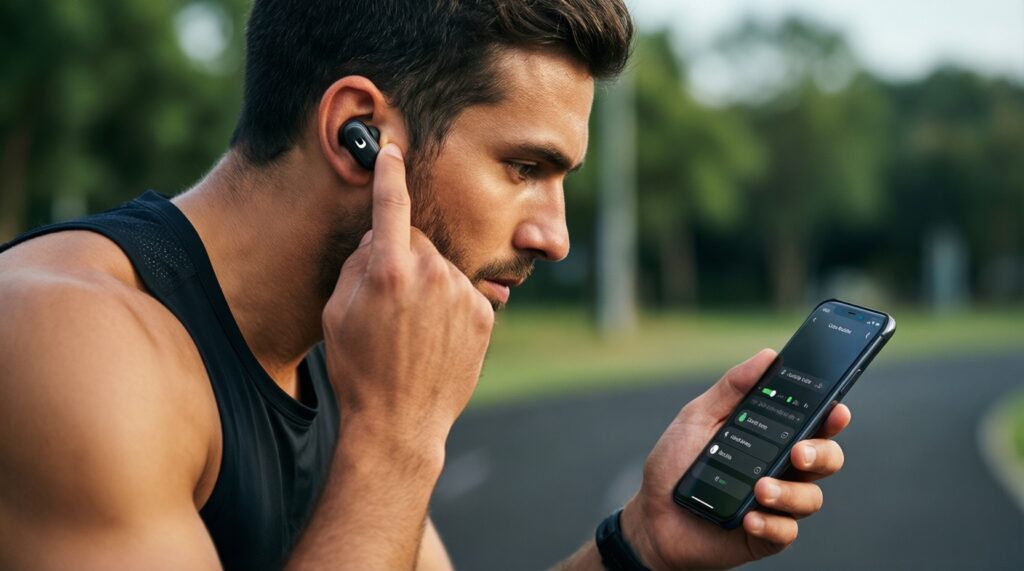
Codec choice matters most for connection stability, latency, and how "clean" the sound feels at moderate volumes. For หูฟังบลูทูธออกกำลังกาย, pick the best common codec between your phone and the earbuds, then prioritize stability over maximum bitrate.
- SBC: Works with everything. Choose it when you want maximum compatibility and fewer handshake issues across devices.
- AAC: Often a strong default for iPhone and many modern phones. Good balance for workouts if it stays stable in your area.
- aptX / aptX Adaptive: Useful on supported Android phones for potentially lower latency and consistent quality; benefit depends on your handset.
- LDAC: Can sound great but may be less stable in crowded RF environments; use it mainly for stationary listening, not high-movement training.
When not to optimize codec: if your earbuds drop out during runs, switch to a more stable option (often SBC/AAC) and fix fit/seal first-codec upgrades won't save an unstable connection or poor seal.
Driver types, sizes and materials: how they shape bass, mids and clarity
You don't need tools, but you do need access to three things before deciding: your phone's supported Bluetooth codecs, a quiet minute to listen at moderate volume, and (ideally) an app EQ (either from the brand or system-wide). Also verify whether your หูฟังกีฬา includes multiple tip sizes.
- Dynamic drivers: Common in budget sets; usually deliver stronger bass. Great for energetic workouts, but can get boomy if the tuning is heavy.
- Balanced armature (BA): More common in IEMs than true wireless at low budgets; can improve detail in mids/highs but may sound thin without good bass support.
- Hybrid: Can be excellent when tuned well, but budget hybrids vary; don't assume "more drivers" means better sound.
| Spec to check (budget sports use) | Must-have | Nice-to-have | How to verify quickly |
|---|---|---|---|
| Codec | SBC + (AAC or aptX that matches your phone) | aptX Adaptive, LDAC (only if stable for you) | Phone Bluetooth audio settings + product spec sheet |
| Water/sweat rating | Clear IP rating, ideally aligned with heavy sweat needs | หูฟังออกกำลังกาย กันเหงื่อ IPX7 for frequent intense training | Look for "IPX..." in official specs (not marketing banners) |
| Battery practicality | Enough for your longest session + commute | Fast charge, reliable case indicator | User reviews for real-life consistency (focus on complaints patterns) |
| Latency behavior | Acceptable for videos/workout apps | Gaming/low-latency mode | Test with YouTube lip-sync and a metronome app |
| Driver info | Any well-tuned dynamic driver with good seal | Quality diaphragm material, well-implemented hybrid | Listen for clean vocals at moderate volume, no harsh peaks |
EQ and sound signature: practical tuning for workouts and outdoor use
- Update the earbuds app (if available) and confirm you can access EQ or presets.
- Prepare 2-3 reference tracks you know well (one vocal, one bass-heavy, one busy/energetic).
- Set volume to "training realistic" (loud enough to motivate, not max).
- Choose your ear tips for best seal before EQ; reseat both earbuds the same way.
-
Start from a neutral baseline
Disable "3D/surround" and extreme bass boosts first. Set EQ to flat or choose the most neutral preset so you can hear what needs fixing.
-
Fix the bass for movement
If footsteps make bass thump or blur vocals, reduce low bass slightly rather than boosting everything else. A small cut is usually safer than chasing "more impact."
- If the sound becomes thin, improve seal with different tips before adding bass back.
- If bass disappears only while running, you likely need a more secure fit (hooks/wings) rather than more EQ.
-
Bring vocals forward for outdoor clarity
Increase the presence region gently so podcasts and vocals stay intelligible in traffic noise. Avoid big treble boosts, which can add hiss and harshness.
-
Control sharpness and fatigue
If cymbals or "S" sounds sting, reduce upper treble slightly. For หูฟังออกกำลังกายเสียงดี ราคาถูก, this one change often makes long sessions comfortable.
-
Save two profiles: gym vs street
Create one "Gym" profile with slightly tighter bass and one "Street" profile with clearer mids. Switching profiles is faster than re-tuning every time.
-
Lock in stability with a quick firmware check
Open the companion app, check for firmware updates, and apply them at home with a stable connection. After updating, re-check EQ because some updates reset presets.
Fit, sweat resistance and connectivity: keeping audio stable while moving
- Seal check: with music paused, your own footsteps should sound slightly "muted," not loud and hollow.
- Shake test: nod and jog in place for 30-60 seconds; the earbuds should not loosen or change bass dramatically.
- Tip sizing: if bass fluctuates when you smile or talk, try one size up (or foam tips if compatible).
- Control test: you can pause/skip reliably with sweaty hands (buttons often win for หูฟังออกกำลังกาย).
- Sweat plan: confirm the IP rating in official specs; wipe after sessions and dry the charging contacts before docking.
- Connection test: walk a typical route with your phone in the pocket you actually use; note any repeatable drop zones.
- Single-ear use: if you run with one earbud, verify it stays stable and doesn't desync.
- Mic sanity check: record a short voice note outdoors; wind handling and occlusion vary a lot in budget models.
Apps, firmware and features: which companion software actually matters
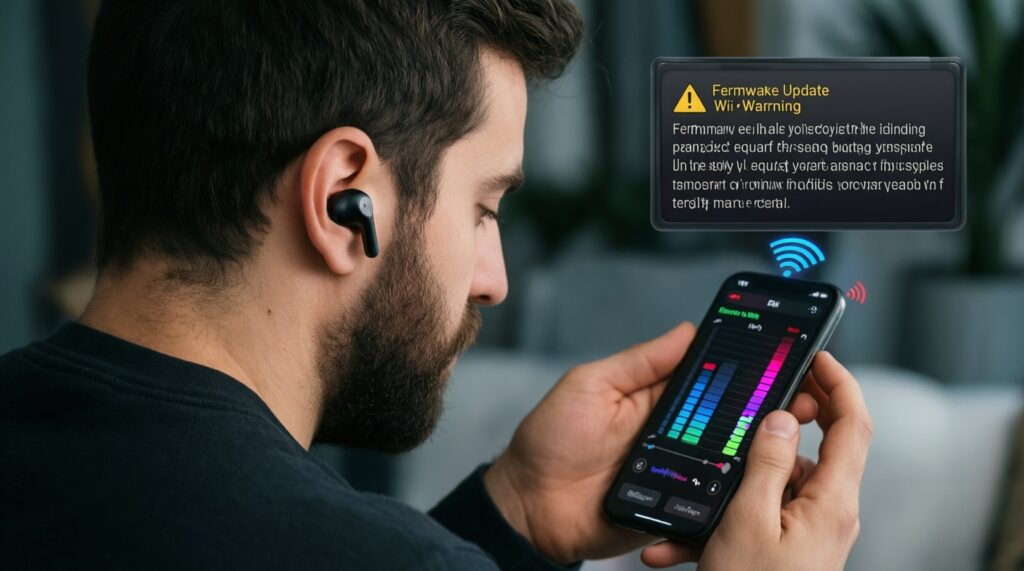
- Using multiple EQ layers at once (earbuds app + phone EQ): this often causes distortion; pick one EQ system.
- Updating firmware on mobile data or in unstable Wi‑Fi: failed updates can cause random dropouts; do it at home.
- Leaving "gaming/low-latency" mode on permanently: it can reduce stability or battery for หูฟังบลูทูธออกกำลังกาย.
- Assuming ANC fixes everything: wind noise and poor fit still leak in; prioritize seal and a "wind reduction" option if available.
- Chasing max loudness: pushing volume to compensate for weak tuning increases fatigue; adjust EQ and fit first.
- Ignoring channel balance: if one side sounds louder, check ear tip seal and app balance settings before returning.
- Forgetting to re-pair after major updates: a clean re-pair can fix odd codec/latency behavior.
Budget trade-offs and a purchase checklist: get the most sound per dollar
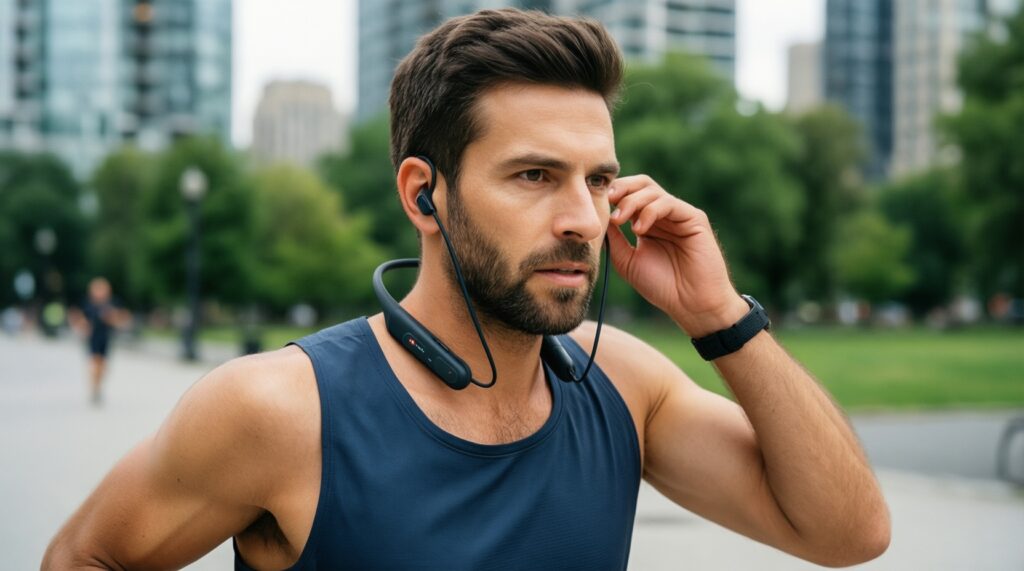
Choose the "right kind of budget" based on where you train and how you listen. These alternatives are often smarter than paying extra for a spec you won't use.
- Neckband Bluetooth: Best when you want fewer dropouts and easier controls; great for outdoor runs where true wireless can be fiddly.
- Wired IEMs + phone dongle: Best sound-per-baht for many people; ideal if you train indoors and don't mind a cable.
- Ear-hook sport true wireless: Best for high-movement workouts; choose this when fit failures are your main problem, even if the codec list is basic.
- Open-ear / air-conduction style: Best for situational awareness outdoors; pick it when safety and comfort beat bass impact.
- Confirm codec match (your phone + earbuds) before buying.
- Pick an IP rating that matches your sweat/rain reality; don't rely on vague marketing.
- Check included tip sizes/hooks; plan a fit retry window.
- Make sure the app provides EQ or at least sensible presets.
- Test stability on your route with the phone in your usual pocket.
Common selection concerns answered concisely
Is SBC enough for good workout sound?
Yes, if the tuning and seal are good. For many หูฟังกีฬา use cases, stable SBC beats an unstable "better" codec.
Should I prioritize AAC or aptX?
Prioritize the codec that your phone supports well and stays stable. If you use iPhone, AAC is usually the practical choice; many Android phones benefit more from aptX when supported.
Do bigger drivers always mean stronger bass?
No. Bass depends heavily on tuning and seal; a smaller driver with a good seal can hit harder than a larger driver with leaks.
What is the fastest EQ change for clearer vocals while running?
Reduce low bass slightly and add a gentle presence boost. If clarity still drops when you move, fix fit before adding more EQ.
Is หูฟังออกกำลังกาย กันเหงื่อ IPX7 necessary?
It's most useful for heavy sweaters or frequent rain exposure. For light indoor workouts, a lower rating can be fine if you dry and clean the earbuds consistently.
Do I need a companion app to get หูฟังออกกำลังกายเสียงดี ราคาถูก?
Not strictly, but an app with EQ/presets helps you correct common budget tuning issues. Without it, you rely entirely on out-of-box tuning and tip fit.
Why do my earbuds sound different outdoors versus indoors?
Wind and traffic noise mask mids/treble, and movement can break the seal. A tighter fit and a "street" EQ profile usually solve most of it.