
If you want the best sweatproof sport earphones for running in Thailand, prioritize three things: an IPX rating that matches your sweat/rain exposure, a retention system that stays stable when you bounce, and microphones/fit that reduce wind noise. For most runners, an IPX5-IPX7 model with secure tips plus earhooks gives the most reliable run-day outcome.
Executive summary: sweatproof performance and run-day tradeoffs
- For หูฟังออกกำลังกาย กันเหงื่อ, IPX is necessary but fit is what prevents dropouts, leaks, and constant readjusting.
- หูฟังวิ่ง IPX7 is useful for heavy sweat and sudden downpours, but it does not guarantee stable Bluetooth or good wind handling.
- The most "หูฟังออกกำลังกาย กระชับ ไม่หลุด" setups are earhooks or wing-tips with the correct tip size; comfort depends on pressure distribution, not clamp force.
- Wind noise is mostly a mic-placement + turbulence problem; "หูฟังวิ่ง ตัดเสียงลม" in marketing often means call wind reduction, not less wind in your music.
- "หูฟังออกกำลังกาย ไร้สาย แบตอึด" should be judged by real-use habits: volume, ANC/transparency, and how often you take calls mid-run.
- Budget-first: spend on fit + IPX first; treat ANC and premium codecs as optional unless you also commute in noisy areas.
IPX ratings explained and what they mean for real runs
Conclusion: Choose the lowest IPX rating that matches your worst run conditions, then spend the rest of your budget on stable fit and usable controls.
- IPX4 vs IPX5: IPX4 is fine for light sweat; IPX5 is safer for heavy sweat and frequent wiping/rinsing.
- IPX6: Better margin for tropical rain bursts and aggressive sweat, especially if you train midday.
- IPX7: Useful if you frequently get drenched or want stronger "accidental soak" tolerance; it's why people search หูฟังวิ่ง IPX7, but it's not a guarantee of durability in every part (like the charging case).
- Case protection: Many cases are not rated; if your runs are rainy, plan where the case sits (dry belt pocket) or avoid bringing it.
- Salt + sunscreen resistance: Sweat is salty; sunscreen/skin oils can degrade tips and coatings-prioritize replaceable tips and easy-to-clean shells.
- Cleaning workflow: If cleaning feels annoying, you'll skip it-choose matte shells, fewer crevices, and mesh that doesn't clog easily.
- Controls under wet fingers: Wet hands make tiny touch zones unreliable; physical buttons or large touch pads matter for pace work.
- Ambient awareness needs: Road running needs awareness; pick a safer "open" option or transparency mode rather than over-sealing by default.
Mechanical fit: ear tips, hooks, and retention strategies for runners
Conclusion: Stable retention comes from three-point contact (tip seal + concha support + cable/earhook stability), not from forcing a tight seal.
Fit test
Protocol: Wear the earphones for 10 minutes, then do 60 seconds each of: high knees, strides, head turns, and shirt wipe. Results: Any "thump," seal breaks, or repeated adjustments predict problems on longer runs. Implication: If you adjust more than once per kilometer, change tips/retention style before blaming the model.
| Option | Who it suits | Pros | Cons | When to choose |
|---|---|---|---|---|
| In-ear TWS (no wings) | Steady runners with "easy-fit" ear canals | Light, easy to pocket; often cheapest entry | Most likely to slip with sweat; seal changes cause bass shifts | Short easy runs, treadmill, or if you already know your ears hold most earbuds |
| In-ear TWS with wing-tips (stabilizers) | Most runners wanting หูฟังออกกำลังกาย กระชับ ไม่หลุด | Better retention without heavy pressure; good budget value | Wing size must match ear shape; may irritate if too large | Daily road runs where you want set-and-forget stability |
| Earhook TWS (over-ear hook) | Intervals, trail, high-sweat users | Best security; least likely to fall even when drenched | Bulkier; glasses/hat can conflict | Hard sessions, humid season runs, or if you've lost buds before |
| Neckband sport earbuds | Runners who hate losing TWS buds | Hard to drop; battery can be strong; physical buttons common | Cable bounce; less "clean" feel; neck sweat can be annoying | Long outdoor runs where reliability beats minimalism |
| Bone-conduction / open-ear (non-sealing) | Road runners prioritizing awareness | Very aware of traffic; no ear canal seal issues in heat | Less bass; louder environments reduce clarity; wind can still be audible | Busy streets, group runs, or when safety/comfort outranks sound quality |
| Open-ear clip-on / "air conduction" style | People who dislike in-ear pressure | Comfortable for some; quick on/off for errands | Sound leakage; variable stability depending on ear shape | Easy runs and casual listening where comfort is the main goal |
Retention tuning checklist (what to change before switching models)
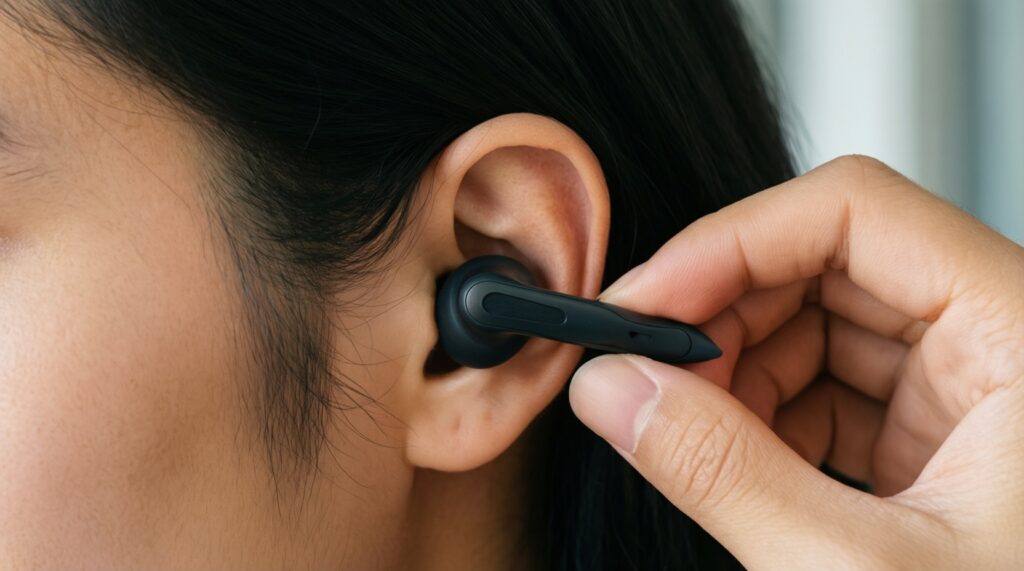
- Try one size up in tips if bass disappears when you land; try one size down if pressure builds fast.
- Rotate the bud slightly forward/back to "lock" the wing into the concha.
- Use foam tips only if you can tolerate heat and maintenance; they can improve grip but may trap sweat.
- For earhooks, check glasses compatibility before buying; comfort failures often come from hinge pressure points.
Wind-noise behavior: testing methods and audible thresholds
Conclusion: You can't fully eliminate wind while running, but you can reduce it by choosing the right form factor, mic placement, and run setup.
Wind test
Protocol: Test in a light-to-moderate breeze (or run past open streets) at two paces: easy and tempo. Try: (1) music only, (2) transparency/ambient on, (3) a voice call sample. Results: Wind is usually worst in transparency and on calls. Implication: If you buy for calls, prioritize "หูฟังวิ่ง ตัดเสียงลม" features; for music, prioritize stable fit and a shape that doesn't create turbulence.
- If you run on exposed roads/bridges, choose a low-profile in-ear shell (less surface for turbulence) and avoid overly protruding designs; budget: wing-tip TWS; premium: models with strong call wind reduction plus usable ambient mode.
- If you rely on transparency for safety, expect more wind hiss; pick an open-ear option or an ambient mode with adjustable levels; budget: open-ear clip-on; premium: adaptive transparency that can damp wind.
- If you take calls while jogging, look for mics closer to the mouth (some earhook/neckband designs help) and test call quality outdoors; budget: neckband with physical controls; premium: advanced beamforming + wind filtering.
- If you run in parks with trees/buildings, wind is less of a limiter; focus on fit and sweat rating first (หูฟังออกกำลังกาย กันเหงื่อ) and treat wind features as a bonus.
- If you often wear a cap or headband, it can either block wind (good) or rub the microphones (bad); test with your usual gear before committing.
Sound quality vs. seal: bass, clarity and passive isolation trade-offs
Conclusion: Better seal usually gives better bass and isolation, but it can reduce safety awareness and amplify footstep thump.
- Decide your priority: safety awareness (open-ear / transparency) or immersion (sealed in-ear).
- Do a 20-second "seal check" track: if bass changes when you smile or turn your head, you need different tips or a wing/earhook.
- If footsteps sound boomy, reduce seal pressure (smaller tip) or choose a design with better mechanical decoupling (often earhooks help).
- If vocals sound distant outdoors, increase passive isolation slightly (better tip fit) before chasing EQ.
- Use EQ last: fix fit first, then add a mild bass shelf only if the seal is stable.
- If you sweat heavily, prefer tips that maintain grip when wet; stability beats "perfect" bass on the first kilometer.
Battery, controls and connectivity under sweat and motion
Conclusion: The most common "bad buy" isn't sound-it's controls you can't use while sweaty and connection behavior that breaks your rhythm.
- Buying touch-only controls with tiny zones: sweat + motion causes mis-taps, especially for skipping tracks mid-interval.
- Assuming the case is as water-resistant as the buds: it usually isn't-keep it dry or leave it home.
- Choosing glossy shells: harder to grip with wet hands; drops happen during adjustment, not during running.
- Ignoring tip replacement availability: tips wear out faster in Thailand's heat; no tips = unstable fit later.
- Overvaluing ANC for running: ANC can add pressure sensation and can react oddly to wind; spend on fit/IPX first.
- Underestimating "real battery": high volume, transparency, and calls reduce runtime; match your longest run habit.
- Not checking single-earbud use: useful for awareness and for conserving battery on easy days.
- Forgetting about phone carry position: back pocket and armband placements can affect stability; test your usual carry.
Budget picks: best value sport earphones by IPX, fit and wind performance
Best for most runners on a budget: a wing-tip TWS with IPX5-IPX7, because it usually delivers the "หูฟังออกกำลังกาย กันเหงื่อ + หูฟังออกกำลังกาย กระชับ ไม่หลุด" combo without paying for features that don't help pace. Best for heavy-sweat and intervals: earhook TWS (security first, bulk is the trade-off). Best for long runs with simple reliability: a neckband with physical controls (หูฟังออกกำลังกาย ไร้สาย แบตอึด focus, with cable bounce as the compromise). Best for roads and awareness: open-ear (less bass, but safer and less seal hassle), while premium options are worth it mainly if you need better call wind handling (หูฟังวิ่ง ตัดเสียงลม) and smoother transparency.
Practical questions runners ask before buying
Is IPX7 always better than IPX5 for running?
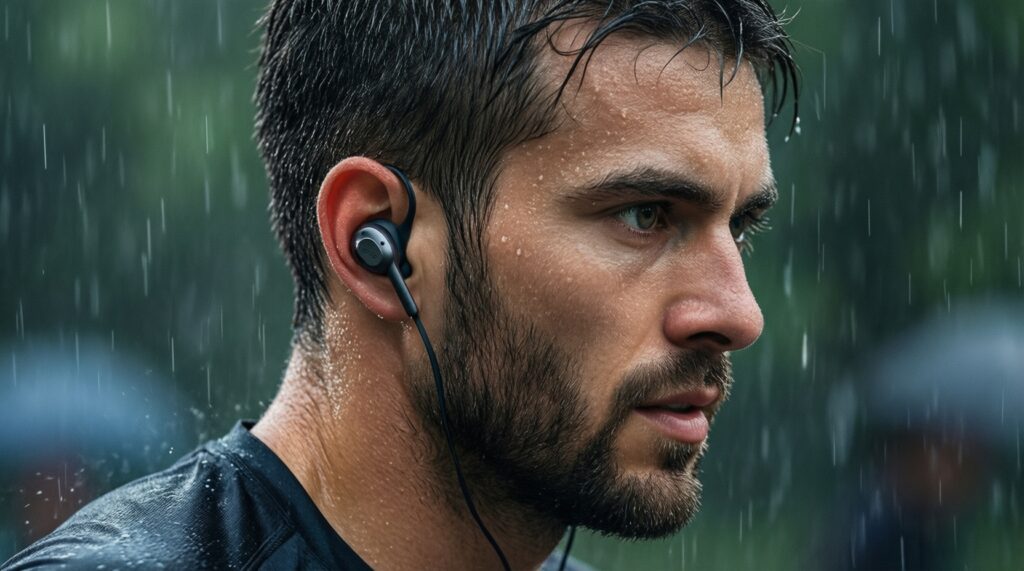
No-IPX7 can add margin for heavy rain and sweat, but fit, controls, and cleaning matter more for day-to-day running comfort and reliability.
Will sweat damage the charging case?
It can, because many cases are not rated. Keep the case dry (sealed pocket) or leave it at home for rainy runs.
How do I know if the fit is truly stable before I buy?
Do bounce and head-turn tests in-store if possible, and prioritize wing-tips or earhooks if you've had buds slip in the past.
Do "wind noise reduction" features help my music while running?
Usually they help call microphones more than music playback. For music, low-profile fit and avoiding overly protruding shells tends to matter more.
Are open-ear models good enough for tempo runs?

They can be, especially for awareness on roads, but expect less bass and more impact from loud surroundings than sealed in-ears.
What's the easiest way to keep sport earphones hygienic?
Wipe after every run, remove tips weekly, and avoid letting sweat dry into the nozzle mesh; choose models with replaceable tips and simple crevice-free shells.