
If you train in Thailand, the best sport earphone style depends on how much you need to hear traffic, how hard you sweat, and how stable the fit must be under impact. In‑ear suits gyms and noisy commutes, open‑ear suits road awareness, and bone conduction suits maximum awareness with a different sound feel.
What to prioritize when choosing sport earphones
- Awareness level: decide if you must hear traffic, cyclists, and gym cues while playing audio.
- Retention under movement: prioritize earhooks, wings, or secure shapes for running and HIIT.
- Sweat and rain tolerance: aim for a clear IP water rating and corrosion-resistant charging contacts.
- Comfort over session length: pressure in the ear canal versus on-ear contact points matters.
- Call quality in wind: microphone placement and wind handling affect outdoor use.
- Controls you can use mid-workout: reliable physical buttons often beat touch in sweat.
How in‑ear, open‑ear and bone‑conduction work for running and gym
Use these criteria to decide what fits your training and environment (including the common Thai searches like หูฟังวิ่ง รุ่นไหนดี and หูฟังกีฬาไร้สาย กันเหงื่อ ราคา):
- Situational awareness requirement: road running and outdoor cycling usually favor open designs; indoor gym sessions can tolerate more isolation.
- Noise level around you: busy streets, BTS/MRT stations, and loud gyms change how much isolation you need.
- Sweat intensity: high-salt sweat accelerates contact corrosion; pick designs with well-protected charging points and easy cleaning.
- Fit stability: jumping, sprints, and burpees demand stronger retention than treadmill jogs.
- Ear sensitivity: some users dislike in-canal pressure; others dislike temple/jaw contact pressure from open or bone conduction.
- Glasses/helmet compatibility: open-ear hooks can conflict with eyewear; bone conduction bands can conflict with some helmets.
- Audio priorities: bass impact and isolation favor in‑ear; awareness and comfort favor open options.
- Call and voice prompt clarity: wind handling and mic placement can matter more than music quality for outdoor training.
Sound, isolation and situational awareness: measurable trade-offs
Below is a practical comparison of the main variants people consider when asking หูฟังกีฬา in ear รุ่นไหนดี, หูฟัง open ear รุ่นไหนดี, or หูฟัง bone conduction รุ่นไหนดี.
| Variant | Who it fits | Pros | Cons | When to choose |
|---|---|---|---|---|
| In‑ear (sealed tips, true wireless) | Gym-focused users; commuters; anyone wanting maximum music detail | Strong bass; better passive isolation; easier to hear coaching/voice prompts in noise | Less traffic awareness; can feel occluding; fit depends heavily on tip size and seal | Indoor training, treadmill, or when you want the most isolation without raising volume |
| In‑ear (earhook or wing retention) | Runners doing intervals; HIIT athletes; people who frequently lose standard buds | Most secure in-ear style; handles sweat movement better; stable during impact | More parts touching the ear; may conflict with glasses; still reduces awareness | If buds fall out during sprints, jump rope, or burpees |
| Open‑ear (air conduction, earhook style) | Road runners; walkers; outdoor trainers who must hear surroundings | High awareness; less in-canal pressure; easier to talk without removing | Less bass; more sound leakage; struggles in very loud gyms or stations | Outdoor running where awareness is the priority over isolation |
| Bone conduction (vibration on cheekbone) | Users prioritizing awareness; people who dislike in‑ear tips; some helmet users | Maximum awareness; ear canal stays open; sweat-friendly feel for many users | Different sound texture; bass depends on fit pressure; can be noisy in wind; may vibrate at higher volume | If you want awareness plus stable wear and can accept a less "sealed" music presentation |
| Hybrid open‑ear with optional earplugs/filters | Mixed-use athletes switching between road and gym | Flexible: awareness outside, more focus inside; helps adapt to changing noise | More to carry; tuning changes with plugs; still not the same as sealed in‑ear isolation | If your weekly routine alternates between outdoor runs and loud indoor sessions |
Compact metric checklist (what to look for on the spec sheet)
| Metric | In‑ear | Open‑ear | Bone conduction |
|---|---|---|---|
| Passive isolation (dB) | Often measurable by third-party tests; strongest when the seal is correct | Usually minimal; designed to keep ambient sound audible | Usually minimal; ear canal remains open |
| Water/sweat resistance (IP rating) | Prefer IPX-four or better for sweat-heavy training | Prefer IPX-four or better; check for exposed speaker ports | Prefer IPX-five or better if you run in heavy rain |
| Typical battery (hours) | Look for enough for your longest session plus commute buffer | Look for stable runtime at moderate volume (open designs tempt higher volume) | Look for stable runtime at outdoor volume needs; wind can push volume up |
| Weight (grams) | Lower is usually better; stability still depends on tip and housing shape | Even small weight can fatigue the ear if clamp force is high | Band pressure matters more than grams; test for hot spots near temples |
Comfort, fit and retention: sizing, tips and common fit failures
- If you feel the earbud "pumping" or footsteps booming, then you likely have too deep a seal or too large a tip; try a smaller tip or a shallower-fit tip style.
- If one side keeps loosening after ten minutes of sweating, then switch to a grippier silicone/foam tip or an in‑ear model with wings/earhooks.
- If open‑ear hooks hurt after a long run, then the hook geometry is mismatched; choose a softer hook, a different hook angle, or bone conduction with lighter clamp.
- If bone conduction sounds thin unless you press it tighter, then fit pressure is insufficient; adjust band position higher on the cheekbone or consider open‑ear air conduction instead.
- If you wear glasses and the ear area feels crowded, then prefer compact in‑ear shells or a bone conduction band that avoids the ear hook area.
Durability, water/sweat resistance and routine maintenance
- Pick a model with a clearly stated IP water rating appropriate for your sweat and rain exposure.
- Inspect the charging design: avoid easily flooded contacts if you train outdoors daily.
- Prefer materials that wipe clean; textured fabric-like surfaces tend to trap salt and grime.
- After every session, wipe housings and tips with a slightly damp cloth, then dry before charging.
- Weekly, remove tips (if in‑ear) and clean the nozzle mesh gently to prevent volume imbalance.
- If you train near the sea or sweat heavily, clean contacts more often and keep the case dry.
Battery life, latency and connectivity considerations for training
- Choosing open‑ear and then compensating by turning volume too high can reduce runtime and increase fatigue.
- Assuming all "gaming modes" help workouts: low-latency modes can reduce stability in crowded radio environments.
- Ignoring multipoint needs: if you swap between watch and phone, confirm device switching behavior before buying.
- Not checking control reliability in sweat: touch controls can misfire with wet fingers or rain.
- Overlooking wind: outdoor calls often fail due to wind noise, not microphone "quality" on paper.
- Expecting perfect connectivity with a phone buried under layers or in a waist belt; body blocking is real, especially during arm swings.
- Buying the smallest case possible and forgetting charging convenience; if the case is fiddly, you will skip topping up and run out mid-week.
- Using only the earphone battery claim and ignoring case recharges; your weekly routine depends on both.
Persona matchups: recommendations for different athlete profiles
For a road runner who values awareness and comfort, open‑ear is often the best fit; for a trail runner who wants awareness but also stable wear, bone conduction can work well if the band stays comfortable; for a HIIT or CrossFit-style athlete, in‑ear with earhooks/wings usually holds best; for a gym commuter dealing with noise, sealed in‑ear is typically the most practical balance.
Common practical concerns resolved
Can I run safely with in‑ear earphones in Thailand traffic?
You can, but it reduces awareness. If you run near roads, consider open‑ear or bone conduction, or keep volume conservative and avoid full noise-blocking modes.
Why do my in‑ear buds keep falling out when I sweat?
Most failures come from the wrong tip size/material or a housing that doesn't lock into your ear shape. Try grippier tips or a sport model with wings/earhooks.
Are bone conduction headphones good for music, not just podcasts?
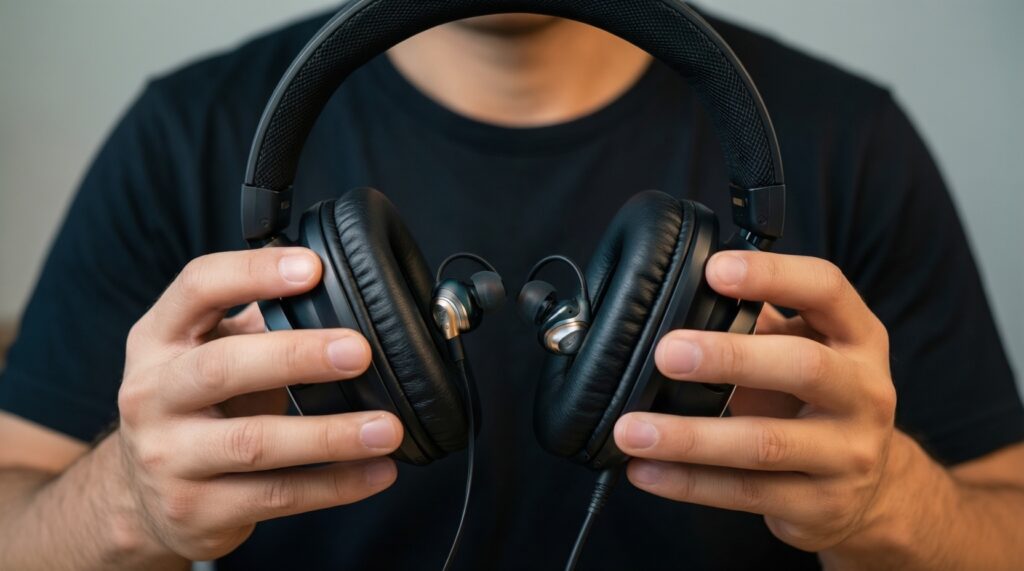
They can be enjoyable, but the sound feel is different and bass depends on fit pressure. If you want maximum bass impact, sealed in‑ear usually wins.
Do open‑ear designs leak sound a lot in the gym?
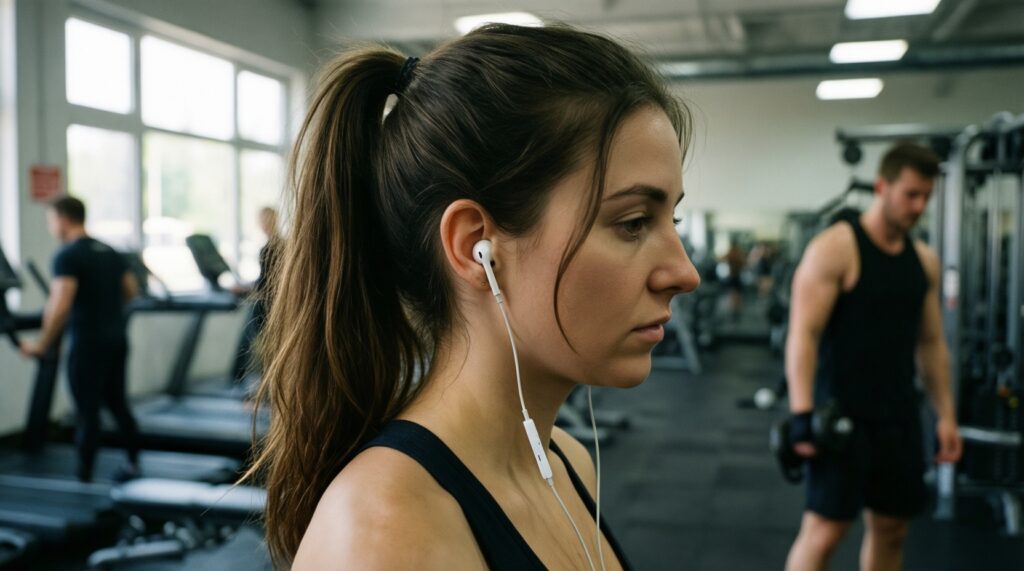
They can leak, especially at higher volume. If you train in a quiet gym area or near others, you may prefer in‑ear for privacy.
What IP rating should I target for sweat-heavy workouts?
Look for a clearly stated IPX rating and prioritize higher protection if you train outdoors in rain. Also prioritize easy cleaning and protected charging contacts.
Is Bluetooth latency a real issue for workouts?
For music, usually not; for video workouts or rhythm training, it can be noticeable. If you do video-guided HIIT, check for a low-latency mode and stable connection.