
A Kickstarter project is only as trustworthy as the creator's track record, the project's transparency, and the realism of its production plan. If you're asking "Kickstarter เชื่อถือได้ไหม", the practical answer is: verify identity, proof, and fulfillment logistics before pledging, and treat unclear timelines, vague budgets, and defensive communication as reasons to avoid backing.
Pre-backing trust checklist
- Creator identity is consistent across Kickstarter, social profiles, and past work.
- The page shows real prototypes or validated progress, not only renders.
- Risks and challenges are specific, with mitigation steps (not generic text).
- Manufacturing, shipping, and taxes/VAT handling are addressed clearly for Thailand.
- Updates and comment responses are timely, specific, and technically coherent.
- Delivery dates and stretch goals look constrained by capacity, not hype.
Assessing the creator's credibility and history
This check is best for intermediate backers who can spend 15-30 minutes cross-verifying claims before pledging. Skip backing when you cannot validate who is behind the project, when the creator avoids accountability, or when prior fulfillment history is poor with no clear explanation.
- Verify the "who": look for a consistent legal name/company, location, and team members (not just a brand name).
- Check past delivery behavior: if there are previous campaigns, read the final updates and comments around delivery time (not only the funding period).
- Scan external footprint: does the creator have credible prior work (portfolio, app releases, shipped products, publications) that matches the current promise?
- Quick heuristic: if the creator's story cannot be confirmed outside Kickstarter within a few searches, treat it as high risk.
Evaluating project transparency and communication practices
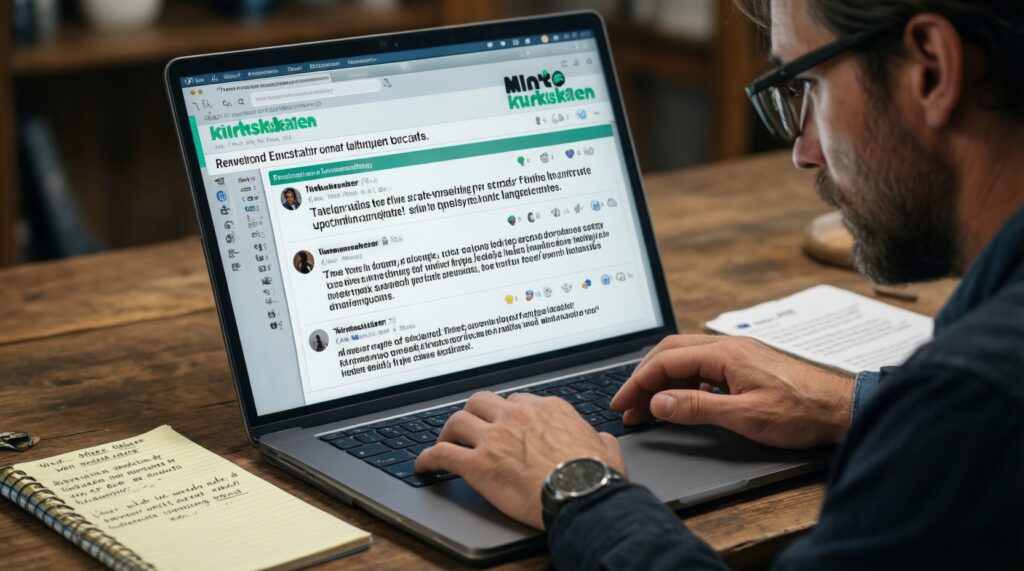
You'll need access to the Kickstarter campaign page, the Updates tab, and the Comments section. Also prepare a browser with translation (for mixed Thai/English threads), a way to save evidence (screenshots/notes), and a quick search tool to cross-check images, names, and claims when doing วิธีตรวจสอบโปรเจกต์ Kickstarter ก่อนสนับสนุน.
- Kickstarter account + logged-in view (some comments/updates are easier to navigate).
- Search engine for name/company checks and image reverse search (to spot reused renders).
- Basic checklist notes: dates promised, milestones, suppliers mentioned, shipping plan.
- Optional: a payment method with good dispute handling (for your own risk control).
- Red-flag language to watch: "trust us" with no proof, "haters" framing, or refusing to answer simple manufacturing/shipping questions.
- Quick heuristic: trustworthy pages answer tough questions publicly; risky pages deflect or go silent.
Verifying technical feasibility and production timelines
- Preparation mini-checklist (5 minutes):
- Write down: promised delivery month, your country (Thailand), and reward tier you want.
- Capture proof: screenshot key claims (materials, specs, certifications, shipping statements).
- List unknowns you must clarify (battery type, tooling, app compatibility, warranty, customs).
- Decide your risk limit: only back if prototype proof + shipping plan is shown.
-
Separate "prototype" from "render"
Look for real photos/videos of a working unit, including imperfections and real-world use. Purely cinematic footage, perfect lighting, and zero hands-on details often indicate a concept stage.
- Prefer: live demos, teardown shots, measurement screenshots, firmware/app screens.
- Red flag: only 3D renders, AI-like images, or stock-looking b-roll.
-
Validate the hardest technical claim first
Identify the single claim that would make the project fail if untrue (battery life, sensor accuracy, material strength, performance). Search whether the claim conflicts with known constraints; if the page gives no test method, treat it as unproven.
- Ask: What was tested? Under what conditions? Who tested it?
- Quick heuristic: extraordinary performance needs measurable evidence, not testimonials.
-
Check manufacturing readiness signals
Creators who are production-ready mention tooling, suppliers, compliance, and QA steps. If everything is "in talks" after funding, the timeline is likely optimistic.
- Good signs: factory partner type, tooling status, EVT/DVT/PVT milestones, QA plan.
- Red flag: no mention of materials sourcing, tolerances, or yield/defect handling.
-
Stress-test the timeline against dependencies
Map the timeline to dependencies: tooling, certification, packaging, freight, customs, last-mile delivery. If delivery is promised soon but these steps are not discussed, assume slippage.
- For Thailand: check whether they address VAT/import fees and the carrier used.
- Quick heuristic: the more "new hardware + new app + new materials," the longer it takes.
-
Verify fulfillment and after-sales realities
Confirm how refunds, replacements, warranties, and customer support will work across borders. If there is no clear policy, "ซื้อของจาก Kickstarter ปลอดภัยไหม" becomes a personal risk decision, not a platform guarantee.
- Look for: warranty length stated, who pays return shipping, support channels.
- Red flag: "we will decide later" for warranty/returns.
Interpreting funding use, stretch goals, and budgeting
- The budget explains major cost buckets (tooling, manufacturing, freight, taxes/fees, support), not only "production."
- Stretch goals do not add complex features that require new tooling, certifications, or software rebuilds without timeline changes.
- Reward pricing looks plausible versus market alternatives; extreme underpricing can signal underestimation.
- Shipping is separated from product cost and includes regions (or explicitly states limitations for Thailand).
- There is a contingency plan for delays (supplier change, component shortage, QC failures).
- They acknowledge Kickstarter fees/payment processing and include them in planning (even if not itemized).
- "Limited early bird" is not used to pressure you into skipping due diligence.
- Quick heuristic: if stretch goals read like a wish list, delivery is likely to slip.
Reading community signals, comments and backer updates
- Only reading the campaign description and ignoring Comments/Updates (many warning signs appear there first).
- Confusing excitement with evidence: lots of hype comments do not validate feasibility.
- Missing pattern-based issues: repeated questions about the same unresolved topic (shipping, certifications, refunds).
- Overvaluing influencer quotes without disclosure of sponsorship, affiliate links, or test conditions.
- Ignoring how the creator responds under pressure; defensive or vague answers can indicate "Kickstarter โกงไหม วิธีดูสัญญาณเตือน" scenarios.
- Not checking update quality: trustworthy updates show progress artifacts (factory photos, test reports, timelines), not just apologies.
- Assuming silence is normal: long gaps during critical phases (tooling, production, shipping) increase risk.
- Quick heuristic: reliable creators answer specific questions with specific artifacts.
Confirming legal, IP and fulfillment safeguards

If your goal is reliability over novelty, consider alternatives that reduce risk when you're unsure วิธีดูว่าแคมเปญ Kickstarter น่าเชื่อถือหรือไม่:
- Wait for retail/post-campaign sales: appropriate when the product is non-urgent and you want reviews, local pricing, and clearer warranty terms.
- Buy from established marketplaces with buyer protection: appropriate when you need predictable delivery and dispute handling more than early-backer discounts.
- Back only "proven shippers": appropriate when the creator has already delivered similar products and shows consistent support history.
- Choose digital or low-fulfillment-risk rewards: appropriate when you want to support the idea but minimize shipping/customs exposure.
Answers to common backer doubts
Kickstarter เชื่อถือได้ไหม if the project looks professional?
A polished page is not proof of delivery capability. Trust signals come from verifiable identity, prototype evidence, manufacturing readiness, and consistent communication.
วิธีตรวจสอบโปรเจกต์ Kickstarter ก่อนสนับสนุน in under 10 minutes?
Check creator identity off-platform, scan Updates for real progress artifacts, read recent Comments for unresolved issues, and confirm shipping/warranty terms for Thailand. If any of these are missing, don't pledge.
Kickstarter โกงไหม วิธีดูสัญญาณเตือน that matter most?
Biggest warnings are: unverifiable team/company, no working prototype evidence, vague budget/timeline, and evasive responses to simple questions. Any combination of these is a strong "skip."
วิธีดูว่าแคมเปญ Kickstarter น่าเชื่อถือหรือไม่ when there's no past campaign history?
Rely more on external proof (portfolio, prior shipped products, partnerships) and on detailed manufacturing and fulfillment plans. First-time creators can succeed, but they must show credible execution signals.
ซื้อของจาก Kickstarter ปลอดภัยไหม for Thailand shipping and customs?
It can be safe only when the campaign clearly states carriers, delivery regions, and who pays VAT/import duties. If they avoid this topic, assume uncertainty and potential extra cost or delays.
If the funding goal is reached fast, does that reduce risk?
No. Fast funding reflects demand, not feasibility; production and fulfillment risks remain unless supported by evidence and planning.