
A Kickstarter project is "trustworthy enough" when you can verify four things fast: the team is real and experienced, the timeline matches the work left, the prototype/manufacturing proof exists, and the risks are disclosed with a realistic plan. Use the checks below to decide whether to back, wait, or walk away before you pledge.
Rapid checklist for judging a Kickstarter's trustworthiness
- Team identities are verifiable (names, roles, past work) and consistent across platforms.
- The campaign shows a real prototype and explains what is still unfinished (no "magic" claims).
- Manufacturing evidence exists (factory quotes, DFM/engineering notes, test reports, certifications plan).
- Timeline includes milestones and dependencies (tooling, compliance, shipping) with clear contingency buffers.
- Budget logic is explained (major cost buckets) and stretch goals don't break delivery.
- Risks are acknowledged (components, logistics, legal/IP) with concrete mitigations.
- Updates and comments show consistent, specific answers and no pattern of dodging hard questions.
Evaluating the founding team and their track record
This check fits intermediate backers who can spend 15-30 minutes verifying people and artifacts before funding. Do it especially for hardware, medical/health, electronics, and any project promising new manufacturing.
Skip backing (or only back at the smallest tier) when: the creator identity is unclear, the team cannot be linked to any prior work, or all proof lives only inside the Kickstarter page. If your core question is "Kickstarter น่าเชื่อถือไหม" for this project, treat identity verification as a hard gate.
- Verify real-world identity and roles. Look for full names, job titles, and who owns engineering, operations, and finance; confirm those details on at least one external professional profile or company site.
- Check execution history, not hype history. Prior shipped products, public repos, published demos, or credible press are stronger than awards or concept renders; confirm what they shipped and what they only announced.
- Look for accountability signals. A registered company name, support email on the same domain, a returns/defects process, and named partners reduce the chance of "ghost creators."
Scrutinizing the project timeline, milestones and delivery realism
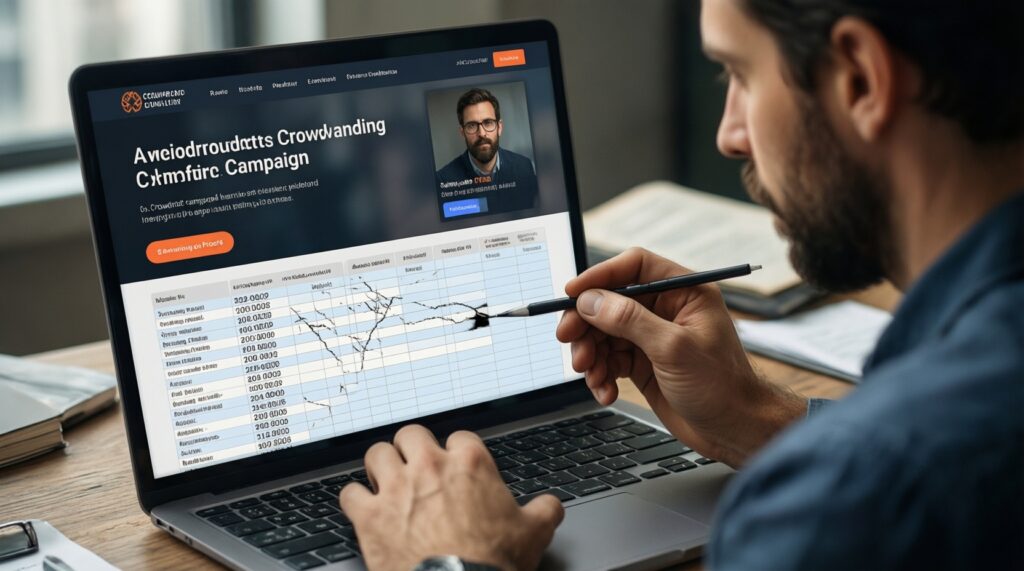
What you need:
- Access to the full campaign page (Risks & Challenges, Updates, Comments) and the creator profile.
- A notes app/spreadsheet to list milestones and missing proofs (simple pass/fail columns).
- Basic knowledge of the domain's long-lead items (tooling, compliance testing, packaging, international shipping).
- 10 minutes to read the last 10 updates/comments for consistency and specificity.
If you're following วิธีตรวจสอบโปรเจกต์ Kickstarter ก่อนสนับสนุน, treat the timeline as a dependency map: if one dependency is missing (e.g., certification plan), the delivery date is not meaningful.
Assessing prototypes, manufacturing proofs and tech readiness
-
Classify what you are seeing: render, prototype, or production unit.
Campaign photos/videos should clearly label which stage each unit is; "looks finished" is not the same as "manufacturable."- Pass: behind-the-scenes footage, measurement/test shots, PCB closeups, firmware demos, failure modes discussed.
- Fail: only cinematic videos, perfect beauty shots, and no engineering artifacts.
-
Demand a "what's left to build" list.
A trustworthy team can name remaining engineering tasks (tooling, firmware polish, safety testing, yield improvements) and the order they will tackle them.- Pass: clear remaining tasks tied to milestones and owners.
- Fail: "We just need funding to start" for anything complex.
-
Look for manufacturing readiness evidence.
For hardware: DFM/DFT notes, BOM maturity, supplier/factory selection status, and packaging/assembly plans are practical indicators.- Pass: named processes (injection molding, CNC, SMT), sample iterations, tolerances, yield/testing approach.
- Fail: "We'll find a factory after funding" with no plan for tooling, QA, or certifications.
-
Check compliance and shipping constraints early.
Batteries, radios, medical claims, children's products, and cosmetics often require certifications and labeling; the campaign should state which markets they will ship to and what compliance path they'll follow.- Pass: explicit certification targets and who is responsible (internal/partner lab).
- Fail: "Worldwide shipping" with no mention of restrictions or documentation.
-
Cross-check with independent signals.
Search for the exact product name + "prototype", "demo", "hands-on", or teardown; independent demos reduce the risk of staged marketing.- Pass: third-party video/images showing real usage and limitations.
- Fail: only reposts of the campaign assets.
Fast mode: 5-minute decision path
- Identity gate. If you can't verify who they are outside Kickstarter, don't back.
- Prototype gate. If you only see renders and no engineering proof, wait.
- Manufacturing gate. If there's no plan for factory/QA/compliance, assume delays and risk.
- Timeline gate. If milestones are missing or impossible, treat the delivery date as marketing.
- Communication gate. If updates dodge specifics or comments are heavily moderated without answers, walk away.
This is the simplest วิธีเลือกโปรเจกต์ Kickstarter ที่ปลอดภัย when you need a quick yes/no.
Verifying budgets, funding allocation and stretch-goal logic
- Costs are broken into major buckets (engineering, tooling, manufacturing, compliance, shipping, customer support) instead of a vague paragraph.
- Shipping and taxes/VAT handling are explained per region, including who pays and when charges happen.
- Stretch goals don't add new core features that require re-engineering or new tooling late in the schedule.
- There is a realistic plan for refunds, defects, spare parts, and warranty handling (even if limited).
- Reward tiers match production reality (limited "early bird" quantities make sense; unlimited cheap tiers are suspicious for hardware).
- They acknowledge platform/payment fees and logistics complexity rather than promising "free worldwide shipping" without detail.
- They describe what happens if funding exceeds the target: scaling plan, supplier capacity, QA ramp-up.
Spotting operational, legal and supply-chain hidden risks
- Overpromising physics or specs. Claims that contradict basic constraints (battery life vs size, noise vs power, performance with no heat/weight tradeoff) are a common "Kickstarter โกง วิธีดูและหลีกเลี่ยง" trigger.
- No plan for component availability. If they depend on a single rare chip/module with no alternatives, expect delays.
- Unclear IP ownership. If the product resembles an existing brand's design or uses licensed tech without mention, legal risk can stop shipping.
- Regulated claims without a pathway. Medical/health benefits, safety certifications, radio approvals, and children's standards need explicit plans.
- Factory ambiguity. "We have partners" without describing capabilities (tooling, assembly, QA) often means nothing is secured.
- Logistics hand-waving. No mention of regional restrictions, returns, lost parcels, or support capacity.
- Single-person bottleneck. One founder doing engineering, ops, and customer support is a delivery risk unless clearly mitigated.
- Policy mismatch. Refund/changes policies that conflict with the platform's nature or local consumer expectations can signal trouble.
Reading backer communications, updates and community signals
When the risk looks high, these alternatives are often more rational than pledging immediately:
- Wait for late pledges or an in-demand store. Use this when the prototype exists but manufacturing/compliance details are still vague; you pay later for reduced uncertainty.
- Buy the previous model or a competitor's shipping product. Best when you need reliability now and the Kickstarter version is a "v2" promise without production proof.
- Back only non-delivery rewards. Suitable when you want to support the idea but can't justify product risk; keep exposure low.
- Follow updates without pledging. If the team communicates well, you can re-evaluate after they publish test results, factory sign-off, or certification progress.
For a คู่มือสนับสนุน Kickstarter สำหรับมือใหม่ mindset, treat communication quality as a leading indicator: good teams show work-in-progress, failures, and specific next steps.
Quick answers to the most common backer doubts
Is Kickstarter a store or a preorder platform?
Neither. It's crowdfunding: you support a project that may deliver later, and delays or changes are common.
If the campaign is "Funded," is it safe?
No. Funding only means they reached the target; it does not verify manufacturability, legality, or delivery capacity.
What is the strongest proof that a hardware project can ship?
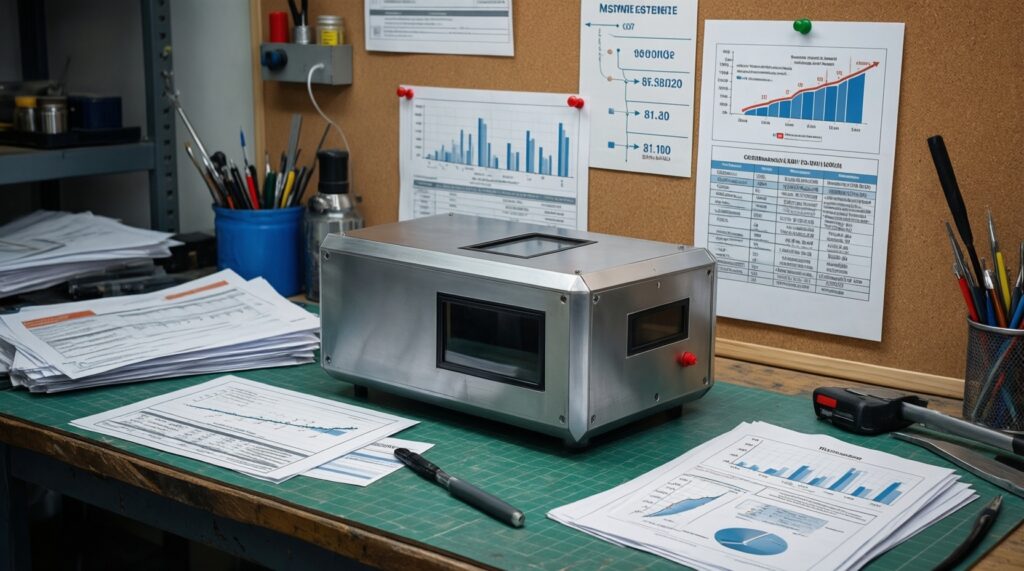
Evidence of a working prototype plus manufacturing readiness artifacts (DFM/QA/testing plan) and a credible timeline with milestones.
How do I tell a render from a real prototype?
Look for unpolished angles: internals, measurements, live demos, test setups, and iteration history. Pure beauty shots and cinematic footage are weak proof.
What comment-section behavior is a red flag?
Repeated dodging of the same technical questions, vague "trust us" replies, or deleting criticism without addressing it.
Should I pledge if I can't afford to lose the money?
No. Only pledge what you can treat as risk capital; use late pledges/retail later if you need certainty.