
Read a Kickstarter campaign page like an investigator by validating the timeline, budget logic, risk signals, and creator communication before you pledge. You are not trying to predict perfection; you are trying to reduce preventable failure. Use red/amber/green evidence checks, verify dependencies (manufacturing, shipping, partners), and only back when promises match demonstrated capability and clear constraints.
Investigator's Brief: Rapid Pre-checklist
- Green: Delivery window matches prototype maturity and manufacturing plan; Red: aggressive timelines with no production detail.
- Green: Budget and stretch goals explain trade-offs; Red: endless features with no cost/time impact.
- Green: Risks are stated with mitigations; Red: "no risk" language or vague reassurances.
- Green: Updates show measurable progress; Red: hype-only updates or long silence.
- Green: Shipping/taxes/returns are explicit; Red: ambiguous fulfillment responsibility.
Timeline Forensics: Decoding Milestones, Estimates, and Delivery Windows
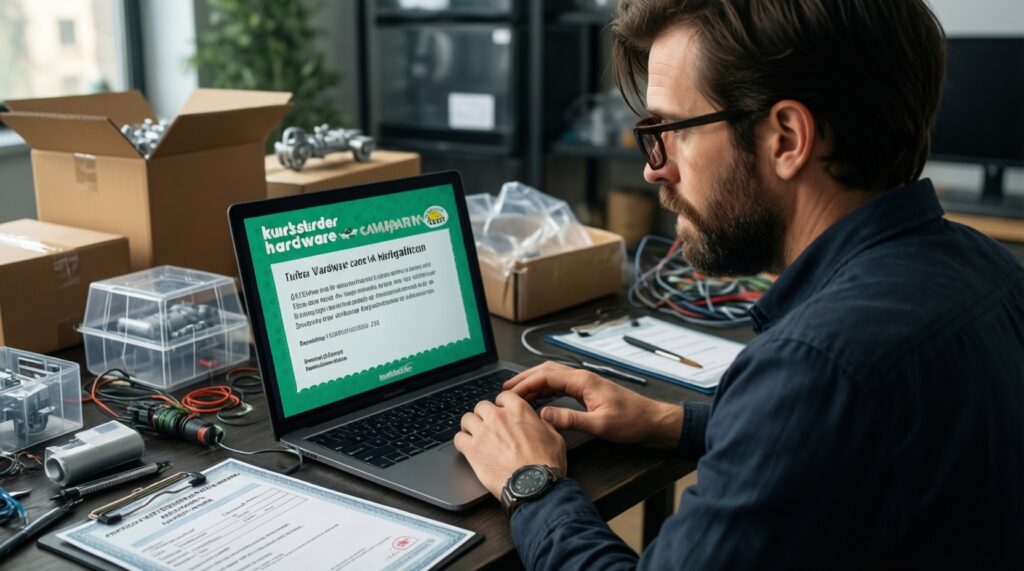
Best fit: Use this when deciding วิธีเลือกสนับสนุน Kickstarter for physical products, complex hardware, or anything with manufacturing and cross-border shipping. It's also useful when you want วิธีดูความน่าเชื่อถือแคมเปญ Kickstarter beyond marketing.
When not to use (or when to walk away fast): If you cannot accept delays, you need guaranteed delivery dates, or the campaign relies on unverifiable claims you can't independently check, don't pledge-buy later at retail or wait for proven fulfillment.
- Map the timeline to real gates: prototype → DFM/engineering validation → tooling → pilot run → mass production → freight → last-mile delivery.
- Look for date math: milestones should have dependency order; parallel steps without justification are an amber signal.
- Separate "estimated delivery" from "manufacturing start": campaigns often show only the final date; demand the middle steps.
- Check change control: if stretch goals add hardware features, the timeline should extend (or explain why it won't).
- Evidence over adjectives: photos/videos of prototypes, test logs, certification plans, factory quotes beat cinematic trailers.
Timeline-to-risk quick read (compact comparison)
| Timeline pattern on the page | Signal level | What it usually means | What to verify next |
|---|---|---|---|
| Clear milestones with dependencies and buffers | Green | Planning is realistic and operationally aware | Ask for current stage (prototype/EVT/DVT/PVT) and supplier status |
| Delivery date given, but no intermediate gates | Amber | Creators may be underestimating manufacturing and logistics | Look for manufacturing partner details and tooling plan |
| Multiple major features promised "by ship date" | Amber | Scope creep likely; schedule may slip | Check if stretch goals include time/cost impacts |
| "We can ship in weeks" for first-time hardware | Red | High chance of delay or non-fulfillment | Demand proof of production readiness, not prototype demos |
| Timeline changes repeatedly without explanation | Red | Weak project control; risk of สัญญาณโปรเจกต์ Kickstarter ล่ม | Audit update history for measurable progress vs. excuses |
Financial Anatomy: Budget Transparency, Stretch Goals, and Allocation Red Flags
What you need before you do a serious เช็คโกง Kickstarter-style review (without overthinking it):
- Access to the full campaign page: Risks & Challenges, FAQ, updates, comments, and reward tiers.
- A quick note sheet: list each promise (features, certifications, regions shipped to) and link it to costs/time.
- Basic cost logic: understand that tooling, certification, packaging, and freight are real line items for physical goods.
- Stretch goal discipline: the ability to say "no" when goals add complexity without resources.
- Currency/fees awareness: platform fees, payment processing, taxes/VAT/import duties can change fulfillment viability.
- Green budget signal: a breakdown that explains major cost buckets and which parts scale with backer count.
- Amber budget signal: a pie chart with no numbers or no explanation of assumptions (MOQ, defect rate, shipping zones).
- Red budget signal: "we'll figure it out later" on tooling, shipping, or certification; or margins that look magically high.
- Stretch goal red flag: adding new SKUs, materials, electronics, or app platforms with no change in timeline or cost.
Risk Indicators: Technical, Manufacturing, and Team Competency Warning Signs
Preparation mini-checklist (do this before the steps):
- Open the "Campaign" tab, "Risks & Challenges," "Updates," and "Comments" in separate tabs.
- Write down the top 5 promises (features + delivery month + shipping regions).
- Identify what type of project it is: digital-only, tabletop, apparel, hardware, medical/health-adjacent.
- Note whether the creator is first-time or has delivered before.
- Decide your boundary: max delay you can tolerate and whether you can accept partial fulfillment.
-
Classify the product complexity first
Digital products and simple print runs have fewer failure points than new hardware, batteries, or regulated devices. Complexity increases dependency risk, which is a common path to สัญญาณโปรเจกต์ Kickstarter ล่ม.
- Green: limited scope, few components, clear platform targets
- Red: new hardware + app + AI + multiple platforms + worldwide shipping
-
Verify prototype maturity with evidence
Prefer real prototypes showing repeatable function, not a one-off demo shot. If the page avoids close-up evidence or test context, treat it as amber.
- Green: engineering samples, internals shown, test results described
- Red: renders only, vague "working prototype" with no details
-
Check manufacturing readiness and supplier credibility
A credible campaign can name the manufacturing approach and where it is in the process (tooling, pilot run). "We'll find a factory after funding" is a red signal for physical goods.
- Green: stated manufacturing partner type, production plan, quality control approach
- Amber: partner hinted but not confirmed, no QA plan
- Red: no mention of MOQs, tooling, lead times, defect handling
-
Audit team competency and role coverage
Look for named individuals and roles that match the work: engineering, operations, compliance, customer support. Outsourcing is fine if responsibilities and oversight are explicit.
- Green: track record delivering similar products; verifiable portfolio
- Red: anonymous team, inflated titles, no delivery history, or unrelated experience
-
Stress-test third-party dependencies
Apps, cloud services, licensed IP, and certification create external points of failure. If the campaign depends on partners, you need evidence of agreements or feasible alternatives.
- Green: dependency named + contingency plan + realistic scope
- Red: "partnership in talks" for a critical component
-
Cross-check rewards, shipping, and support workload
Too many reward tiers and customizations can sink fulfillment. A clean reward structure is often safer than endless variants.
- Green: few SKUs, clear shipping zones, clear support policy
- Amber: many add-ons without logistics detail
- Red: custom builds for each backer with tight delivery claims
Communication Audit: Frequency, Tone, and Responsiveness of the Creator
- Updates include measurable progress (photos of production, test outcomes, shipment batches), not only motivation posts.
- Creator answers hard questions directly (manufacturing, delays, shipping costs), not with generic optimism.
- Comments show consistent engagement, especially on recurring concerns (shipping, refunds, defects).
- Bad news is disclosed early with a revised plan (green) rather than hidden until the last moment (red).
- Tone stays factual under pressure; personal attacks or blame-shifting are red signals.
- Delivery changes come with root cause + mitigation + new dates, not only "unexpected challenges."
- Creator avoids deleting critical questions; transparency is visible in how criticism is handled.
- External channels (website, social) match the campaign claims and don't contradict timelines.
Backer Safeguards: Shipping, Refunds, Contracts and Third‑party Dependencies
- Mistake: Treating "estimated delivery" as a guarantee. Safer move: pledge only what you can afford to lose.
- Mistake: Ignoring shipping fine print (zones, surcharges, remote areas). Safer move: confirm Thailand delivery terms and who pays VAT/import duties.
- Mistake: Assuming refunds are standard. Safer move: read the creator's stated refund stance and Kickstarter's framework; plan as if refunds may not happen.
- Mistake: Backing campaigns with unclear IP/licensing rights. Safer move: ensure they can legally ship what they promise.
- Mistake: Funding critical dependencies with no proof (apps, certifications, "partners"). Safer move: look for credible evidence or a fallback plan.
- Mistake: Choosing the most complex reward tier "for value." Safer move: pick the simplest tier that still satisfies you; complexity amplifies fulfillment risk.
- Mistake: Skipping creator history. Safer move: check whether they have delivered before and how they handled delays.
- Mistake: Not documenting claims. Safer move: save screenshots/links of key promises in case updates change later.
Aftermath Signals: Post‑campaign Updates, Fulfillment Patterns and Long‑term Viability

If the risk profile stays amber/red, these alternatives often fit a คู่มือสนับสนุน Kickstarter อย่างปลอดภัย mindset:
- Wait for post-campaign proof: back later via pledge manager only after production photos, tracking batches, and real backer deliveries appear.
- Buy at retail (or official store) later: pay more for lower risk once warranty/support channels exist.
- Choose a delivered creator's next project: prioritize teams with a visible fulfillment track record, even if the product is less novel.
- Use a simpler substitute: select a product with fewer dependencies (no app, fewer SKUs) to reduce failure points.
Common Investigator Questions and Direct Answers
How do I decide a safe pledge amount?
Pledge only what you can lose without financial stress. Treat rewards as a best-effort outcome, not a purchase contract.
What is the single strongest red flag on a Kickstarter page?
Big promises with no verifiable evidence of readiness (prototype, manufacturing plan, or credible team). This is often the fastest indicator when you เช็คโกง Kickstarter at a high level.
Is a first-time creator automatically risky?
Not automatically. It becomes risky when they lack role coverage (operations/manufacturing/support) and cannot explain milestones with evidence.
How can I spot timeline manipulation?
If stretch goals add major scope but the delivery window never changes, treat it as amber/red. Real projects show trade-offs and revised schedules.
What should I look for in updates after funding?
Concrete milestones: tooling started, pilot run results, QA process, shipping batch numbers, and clear delay explanations. Silence or hype-only posts are common สัญญาณโปรเจกต์ Kickstarter ล่ม.
How do I evaluate shipping risk for Thailand?
Check whether Thailand is explicitly supported, who pays VAT/import duties, and whether shipping prices can change later. Ambiguity is risk, even for honest creators.
Which page sections matter most for วิธีดูความน่าเชื่อถือแคมเปญ Kickstarter?
Risks & Challenges, Updates, Comments, and the reward/shipping fine print. These sections reveal execution capability more than the video does.