
For running, the "most secure" choice depends on your ear shape and how much outside sound you want. In-ear can lock in best with the right tips, earhook adds mechanical retention for sweaty, bouncy runs, and open-ear trades some bass for awareness. Pick by fit stability first, then sweat resistance, then safety needs.
Quick comparison at a glance
- Maximum hold: earhook designs (good for heavy sweat, fast cadence, and frequent head turns).
- Best isolation: in-ear with the right tip size/material (strong for gyms and noisy streets).
- Best awareness: open-ear (useful in Thai city traffic and mixed-use paths).
- Most forgiving fit: earhook or semi-open in-ear (less tip sensitivity).
- Lowest-risk for "ear pressure" fatigue: open-ear, then semi-open in-ear.
- Best value path: buy fit first (tips/hooks) before paying for premium codecs or features.
How each design stays in place: anatomy and fit
Use these criteria to decide which style will stay put on your ears during runs in Thailand's heat and humidity.
- Ear canal shape and depth: shallow canals often struggle with deep-sealing in-ear; earhook/open-ear can be more stable.
- Tip seal vs. stability: a perfect seal can still slip if the nozzle angle fights your ear geometry.
- Tip material: silicone is easy to clean; foam can grip better but degrades faster with sweat and heat.
- Retention method: none (classic in-ear), fin/wing tip (anti-rotation), or earhook (mechanical lock).
- Weight distribution: heavier earbuds shift on impact; balanced housings "bounce" less.
- Vent design: vents reduce pressure but may reduce isolation and change fit feel during long runs.
- Ear fatigue points: hotspots usually come from wings/hooks pressing cartilage or tips that are too large.
- Sweat handling: look for an IP rating suitable for workouts (commonly IPX4-IPX7) and smooth surfaces that wipe clean.
If you're searching หูฟังวิ่ง ยี่ห้อไหนดี, start by filtering to the design that matches your anatomy (tip seal vs. hook retention vs. open-ear clamp), then compare models within that design.
Sound and safety trade-offs for runners
Runners usually trade between isolation (stronger bass, less ambient sound) and situational awareness (safer in traffic, easier to hear others). This is the core difference between หูฟัง in ear สำหรับวิ่ง and หูฟัง open ear สำหรับวิ่ง.
| Option | Who it suits | Pros | Cons | When to choose |
|---|---|---|---|---|
| In-ear (sealed) | Runners who want stable bass and strong noise reduction | Best isolation; strong bass; easier to hear podcasts at lower volume | Less awareness; tip fit can be finicky; pressure/occlusion can fatigue some ears | Gyms, treadmills, quieter routes, or when you need maximum focus |
| In-ear with wing/fin | Those who like in-ear sound but need extra anti-slip | Better retention than plain in-ear; still good isolation | Wing pressure can irritate; fit is more model-specific | Interval days, sweaty runs, or if plain in-ear slowly "walks out" |
| Earhook in-ear | High-sweat runners and anyone who loses earbuds easily | Top-tier stability; less fear of drops; good for sprints and trails | More visible; hooks can conflict with glasses; may feel bulky under caps | Tempo sessions, trail running, or any run where falling out is unacceptable |
| Open-ear (air conduction / ear-clip / earhook open) | Road runners prioritizing awareness and comfort | Best awareness; less ear pressure; easier for long runs | Less bass; more sound leakage; struggles in very noisy roads | City running in Thailand, shared paths, group runs, or when you must hear traffic |
| Bone conduction (open-ear via cheekbone) | People who dislike in-ear tips or need maximum ear-canal openness | Ear canal stays open; stable with a band; good awareness | Sound can feel "thin"; vibration sensation for some; leakage possible | Hot/humid runs when in-ear feels uncomfortable, or for safety-first routes |
For most runners choosing หูฟังไร้สายสำหรับวิ่ง, the practical decision is: in-ear/earhook if you need sound focus and bass; open-ear/bone conduction if you need consistent awareness.
Battery, connectivity and real-world durability
- If your runs are under an hour and you hate charging, then prioritize a case that's easy to top up daily and earbuds that reliably reconnect quickly; budget models can be fine if connection is stable on your phone.
- If you run in crowded RF areas (BTS/MRT stations, busy condo zones), then choose models known for stable Bluetooth and solid antenna placement; premium options often justify the cost here with fewer dropouts.
- If you take calls while running, then prioritize wind handling and mic consistency over "hi-res" audio; mid-range earbuds often beat cheap ones in call reliability.
- If you sweat heavily or run in rain, then pick หูฟังออกกำลังกาย กันเหงื่อ with an appropriate IP rating and easy-clean meshes; paying more can be worth it for better sealing, coatings, and fewer long-term issues.
- If you watch training videos or use cadence/interval apps, then avoid noticeable latency; budget earbuds may be acceptable for music but can lag on video-premium sets are more consistent.
Budget-first tip: spend first on the design that fits (earhook vs in-ear vs open-ear), then on durability (IP rating, build), then on "nice-to-haves" (ANC, advanced codecs). Premium-justified cases: frequent dropouts, lots of calls, or repeated sweat-related failures.
Performance on a budget: best-value choices and compromises
- Pick your safety baseline: if you run near traffic, start from open-ear/bone conduction; otherwise shortlist in-ear/earhook.
- Decide retention level: if earbuds have ever fallen out, move up to wing/fin or earhook immediately.
- Set a minimum sweat spec: choose a workout-suitable IP rating and avoid glossy shells that get slippery with sweat.
- Check comfort risk: if you hate canal pressure, deprioritize deep-sealing in-ear and test open-ear or vented designs.
- Audit your phone use: calls and crowded areas push you toward more reliable (often pricier) Bluetooth implementations.
- Buy fit accessories early: alternate tip sizes/materials or a better earhook geometry can outperform "upgrading" sound.
- Only then pay for extras: ANC and premium codecs matter less outdoors than fit, awareness, and connection stability.
Sport-specific fit tips and troubleshooting during runs
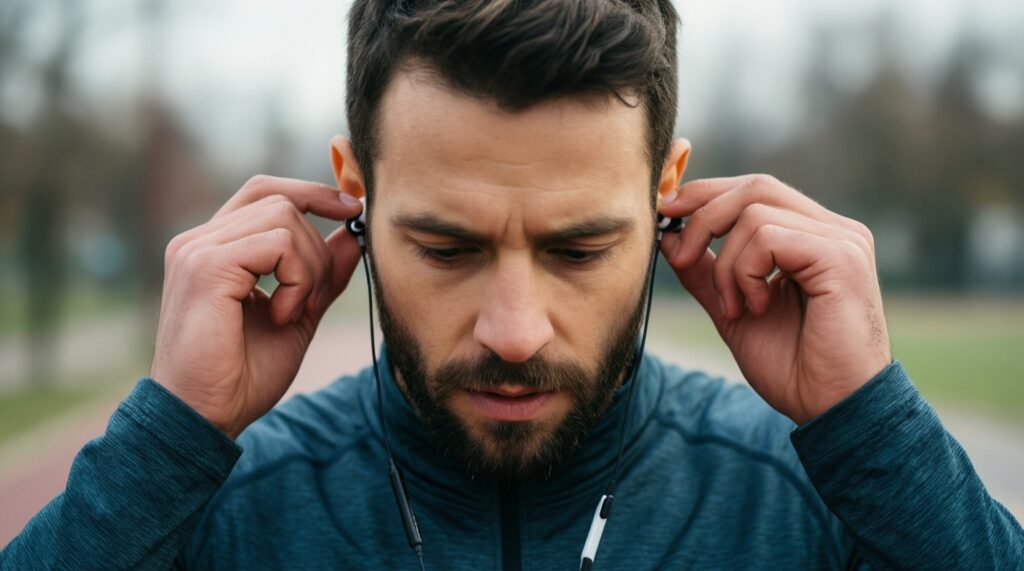
- Using the wrong tip size: too small slips with sweat; too large hurts and slowly pushes out. Test one ear at a time and re-check after 10 minutes of running.
- Skipping the twist-lock insertion: many in-ear designs need a slight rotate to seat the nozzle and reduce bounce.
- Assuming ANC = good for running: isolation can reduce awareness; use transparency modes carefully and don't rely on them as a safety tool.
- Earhook set too loose/tight: loose hooks bounce; tight hooks create hotspots. Adjust so the hook stabilizes without pressing.
- Wearing glasses with hooks: route the hook and glasses arms so they don't fight; if they do, consider wing-tip in-ear or open-ear clips.
- Sweat clogging meshes: wipe after every run; buildup reduces volume and can cause channel imbalance.
- One earbud always falling out: ears are asymmetric-use different tip sizes left vs right, or switch to earhook for that side.
- Open-ear too quiet outdoors: choose routes with less traffic noise, or reserve open-ear for easy runs and use in-ear for quieter environments.
Choosing by running style: tempo, trails and long distances

For tempo and intervals, earhook in-ear is often the most confidence-inspiring because retention stays consistent when you accelerate and sweat. For trail running, earhook (or secure wing-tip in-ear) reduces drop risk on uneven footing. For long distances and easy city runs in Thailand, open-ear or bone conduction tends to feel less fatiguing while keeping awareness high.
Practical concerns runners ask most
Which stays in place best: in-ear, earhook, or open-ear?
Earhook typically wins on pure retention. In-ear can match it only when the tip size, nozzle angle, and seal are perfect. Open-ear stays stable if the clamp/loop fits your ear shape, but it's less universal than earhook.
Is open-ear safer for road running in Thailand?
Open-ear generally preserves awareness better because your ear canal remains open. It's still on you to run defensively; treat it as a help, not a guarantee.
What IP rating should I look for in sweat-proof workout earbuds?
Choose a model with an IP rating intended for workouts (commonly IPX4 or higher) and simple surfaces that wipe clean. If you regularly run in heavy rain, prioritize higher water resistance and tighter ports/mesh design.
Do I need ANC for running?
Usually no-fit and stable volume matter more outdoors. ANC can be useful on treadmills or gyms, but it can reduce situational awareness on roads.
Why do my earbuds sound uneven after a few weeks?
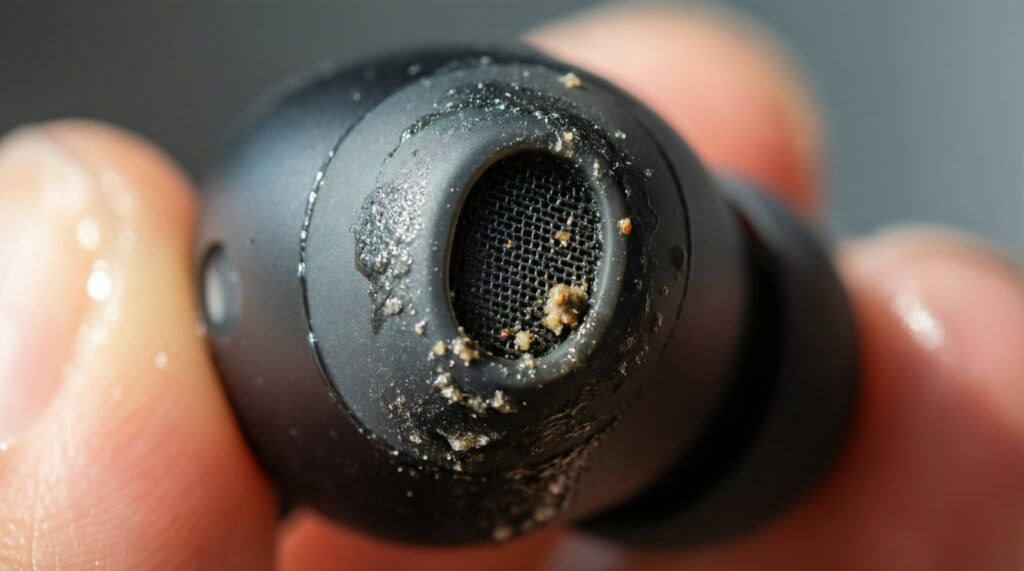
Most often it's sweat and debris clogging the nozzle mesh. Clean gently per the manufacturer guidance and keep earbuds dry between runs.
How do I reduce wind noise when running?
Use lower-profile earbuds, enable wind reduction if available, and avoid blasting volume. Positioning also matters: a more secure seal (in-ear) often reduces perceived wind compared with open-ear.
How can I decide fast if I'm stuck between two models?
Pick the one with better retention and sweat handling first; you'll notice that every run. Treat sound upgrades as secondary once stability and comfort are solved.