
To choose an exercise-focused smart band in Thailand, prioritize sport-mode depth, GPS implementation, waterproof suitability for your training, build durability, and battery behavior under continuous tracking. The "best" option is the one that matches your main sport: runners benefit most from built-in GPS and stable heart-rate sensing, swimmers need stronger water protection and secure straps, and multisport users need flexible modes and reliable syncing.
Core comparison criteria at a glance
- Sport modes: how many are truly distinct (separate metrics, lap logic, auto-detection) rather than cosmetic profiles.
- GPS type: built-in vs connected; cold-start reliability; track stability near buildings/trees.
- Water suitability: rating plus button/touch behavior when wet and strap security for pool/open-water sessions.
- Durability cues: glass type, bezel protection, strap attachment design, and corrosion resistance from sweat/salt.
- Battery under load: what happens to run time when GPS + always-on HR + notifications are all enabled.
- Sensor stack: HR LEDs/photodiodes quality, accelerometer/gyro use for pace/cadence, and optional barometer for elevation.
- Data ecosystem: export formats, sync stability, and compatibility with common training platforms (and phone OS in TH).
How sport modes affect workout tracking accuracy
Sport modes matter only when they change the measurement model and the recorded fields. Use this checklist to evaluate whether a band's "many modes" will improve your data quality:
- Per-sport metric set: running should include pace/cadence/laps; swimming should include laps/stroke; strength should include sets/rest timers.
- Lap logic: manual lap support, auto-lap by distance, and interval structures (work/rest) for repeatability.
- Auto-detection boundaries: how it decides start/stop and whether it misclassifies warm-ups (important if you want clean sessions).
- Sampling behavior: whether the band keeps high-rate sampling during active sessions (especially for HR and GPS).
- Motion model tuning: separate algorithms for walking/running/cycling reduce step-to-pace conversion errors when GPS is off.
- Pool mode specifics: pool length selection, turn detection stability, and whether it ignores kickboard/drills.
- Strength/HIIT support: timers, rep counting accuracy expectations, and whether you can edit sets after the workout.
- Custom screens/fields: ability to show the fields you actually use mid-workout (pace zones, HR zones, lap time).
If you're asking "สายรัดข้อมืออัจฉริยะ โหมดกีฬา หลายโหมด รุ่นไหนดี", treat the mode list as useful only if it changes fields, lap logic, and export detail for your main sport.
Built-in GPS versus connected GPS: practical trade-offs
GPS choice is a workflow decision: do you want independent tracking without a phone, or do you accept phone dependence in exchange for lower cost and potentially longer band battery? If you plan to ซื้อสายรัดข้อมืออัจฉริยะ GPS กันน้ำ, prioritize the GPS behavior you will actually use during training.
| Variant | Who it fits | Pros | Cons | When to choose |
|---|---|---|---|---|
| Built-in GPS (single-band) | Most runners and cyclists who want phone-free tracking | Independent outdoor pace/distance; consistent route logging without phone app dependence | Higher battery load than connected GPS; accuracy can degrade in dense urban areas | Regular outdoor runs in parks/roads; you want stable splits and map traces |
| Built-in GPS (multi-band/dual-frequency) | Runners training in city centers, under trees, or near tall buildings | Better track stability in difficult reception; fewer pace spikes on turns | Usually higher typical price tier; can increase power draw | Frequent "urban canyon" routes or technical trails where pacing stability matters |
| Connected GPS (uses phone) | Gym-first users who sometimes run outdoors with a phone | Lower band power use; bands can be smaller/lighter; typical price often lower | Requires phone carry; phone battery and app permissions affect reliability | Outdoor sessions are occasional and you always carry your phone anyway |
| No GPS (accelerometer-based distance) | Treadmill runners, indoor training, casual tracking | Longest battery potential; simplest device management | Outdoor distance/pace less reliable; calibration required for better estimates | Mostly indoor workouts and you care more about HR/time than route accuracy |
| Hybrid: built-in GPS + connected assist | Users who want flexibility (sometimes phone-free, sometimes with phone) | Can switch modes per workout; fallback options if one method fails | More settings complexity; behavior varies by brand implementation | Mixed routine: commuting walks, weekend long runs, travel where phone use varies |
For "สายรัดข้อมืออัจฉริยะ กันน้ำ วัดชีพจร สำหรับวิ่ง", prioritize built-in GPS (single- or multi-band) and a band known for stable optical HR during arm swing; connected GPS often looks fine on maps but can complicate pacing when the phone app drops or power saving triggers.
When comparing "สายรัดข้อมืออัจฉริยะ ออกกำลังกาย ราคา", treat GPS as a major cost driver: if you rarely need outdoor mapping, connected GPS or no-GPS options can be the rational spend.
Interpreting waterproof ratings for real training conditions
- If you only sweat heavily and shower with the band, then focus on sealed construction, corrosion resistance, and reliable touch behavior when wet more than the highest water rating.
- If you do pool swimming, then choose a device explicitly supporting swim workouts (laps/strokes) and ensure the strap/closure is secure; avoid relying on touchscreens underwater.
- If you do open-water swimming or triathlon training, then prefer stronger water suitability plus stable fit (less optical HR dropouts) and consider built-in GPS for open-water routes if supported.
- If you do water sports with repeated impact (e.g., surf-style wipeouts or obstacle races), then prioritize physical button control, reinforced strap lugs, and bezel protection-water rating alone won't prevent damage.
- If you plan sauna/steam-room use, then be conservative: heat and pressure changes can stress seals even when "waterproof" is stated; remove the band unless the manufacturer explicitly supports it.
Materials and construction: what determines real-world durability
- Check strap attachment design: prefer secure, replaceable straps with robust lugs; avoid thin proprietary clips if you train daily.
- Inspect bezel and screen edge protection: a raised bezel or protective rim reduces scratch/crack risk during kettlebells or falls.
- Evaluate casing material: look for metal/polymer blends that resist sweat corrosion; confirm charging contacts don't feel loose.
- Confirm button quality (if present): firm travel and minimal wobble improves usability in rain/pool settings.
- Assess fit stability: a band that doesn't rotate reduces HR artifacts; choose the smallest size that still sits flat.
- Review ingress points: speaker holes, mic ports, and decorative seams add risk; simpler shells often survive longer.
If your priority is "สายรัดข้อมืออัจฉริยะ ทนทาน แบตอึด สำหรับกีฬา", durability is usually won by conservative design: stable strap lugs, protected screen edges, and consistent charging contacts matter more than thinness.
Battery performance: balancing run time, GPS use and charging
- Assuming advertised battery equals GPS battery: continuous GPS + frequent HR sampling can reduce run time substantially.
- Ignoring display settings: always-on display (or high brightness outdoors) can rival GPS as a drain during long sessions.
- Leaving notifications fully enabled: constant vibration + screen wakes are measurable drains, especially on smaller bands.
- Not accounting for cold starts: repeated GPS cold starts (short sessions) can be less efficient than one longer session.
- Using unstable strap fit: poor contact increases HR retries and signal processing, which can add small but real power cost.
- Overusing third-party watchfaces/widgets: some implementations keep the device awake more often.
- Forgetting charging practicality: proprietary chargers are easy to lose; evaluate whether you can charge reliably during travel in TH.
- Expecting "battery saver" to preserve metrics: power modes often reduce sampling, which changes training data quality.
Sensor fidelity and how data syncs with training platforms
- Runner path: Do you run outdoors at least weekly?
- Yes → Do you want phone-free runs? Yes → choose built-in GPS; No → connected GPS can be enough.
- No → focus on HR stability and indoor modes; GPS is optional.
- Swimmer path: Do you swim in a pool or open water?
- Yes → choose swim-specific modes + secure strap + strong water suitability; prefer physical buttons over touch-only control.
- No → prioritize sweat durability and comfort instead of maximum water specs.
- Multisport path: Do you switch sports in the same week (run + gym + bike)?
- Yes → choose deeper sport profiles, flexible data fields, and stable app sync/export.
- No → buy for the single sport you actually do; avoid paying for unused modes.
Best fit tends to split by use: for runners, a band with built-in GPS and consistent optical HR plus clean exports is usually the strongest match; for swimmers, prioritize water-appropriate design, secure fit, and swim logging over fancy GPS; for multisport athletes, pick the device with the most reliable cross-sport syncing and configurable workout screens rather than the longest feature list.
Common buyer clarifications
Do I need built-in GPS if I always carry my phone?
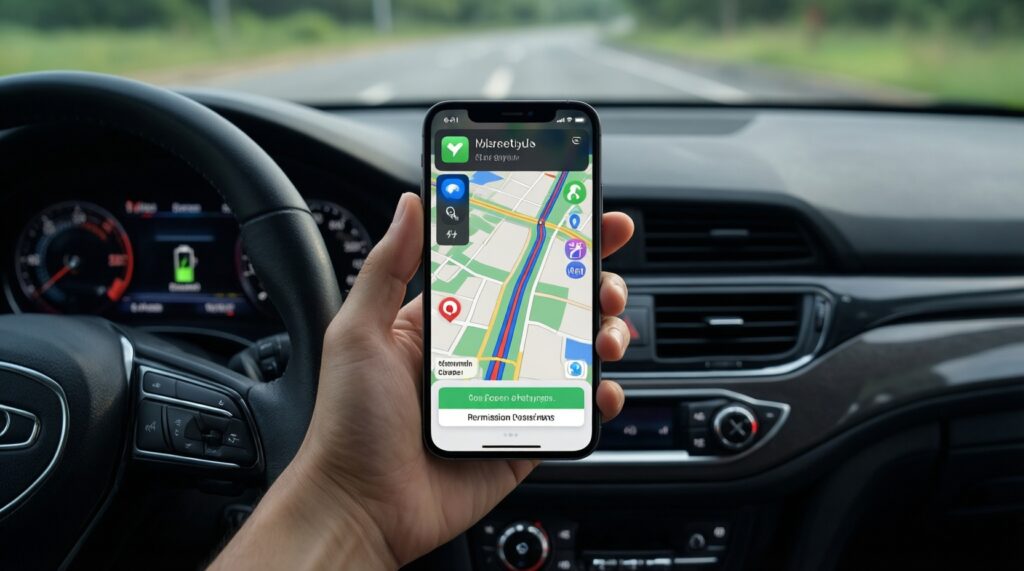
No; connected GPS can work well if your phone app stays active and you accept phone battery/app-permission dependencies.
Is "waterproof" enough for pool training?
Not by itself. You also need swim workout support (laps/strokes) and a strap that won't loosen when wet.
Why does heart-rate sometimes spike or drop during runs?
Optical HR is sensitive to fit, arm swing, and sweat. A tighter, stable placement above the wrist bone usually reduces artifacts.
Will more sport modes automatically improve accuracy?
Only if modes change metrics, sampling, or lap logic. A long list of modes without per-sport fields is mostly labeling.
Can I trust treadmill distance without GPS?
It's an estimate from motion sensors and needs calibration. It can be consistent, but it won't match outdoor GPS-based distance.
What should I check for "battery endurance" claims?
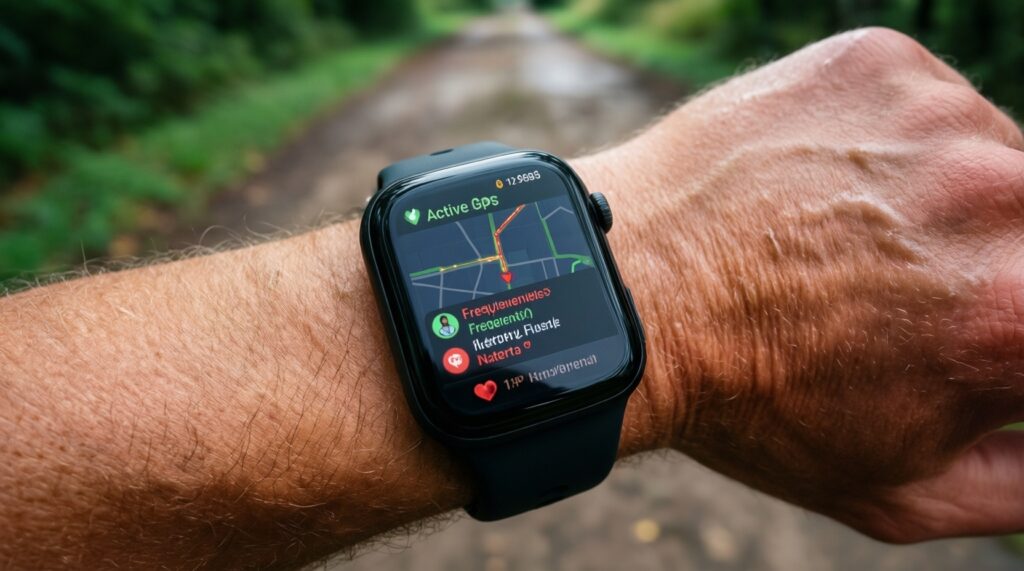
Verify what happens with GPS on, frequent HR sampling, and notifications enabled. Those settings define real training battery behavior.
Which sync features matter most for training analysis?
Look for reliable workout export, stable background sync, and clear access to lap/interval data in the app you actually use.